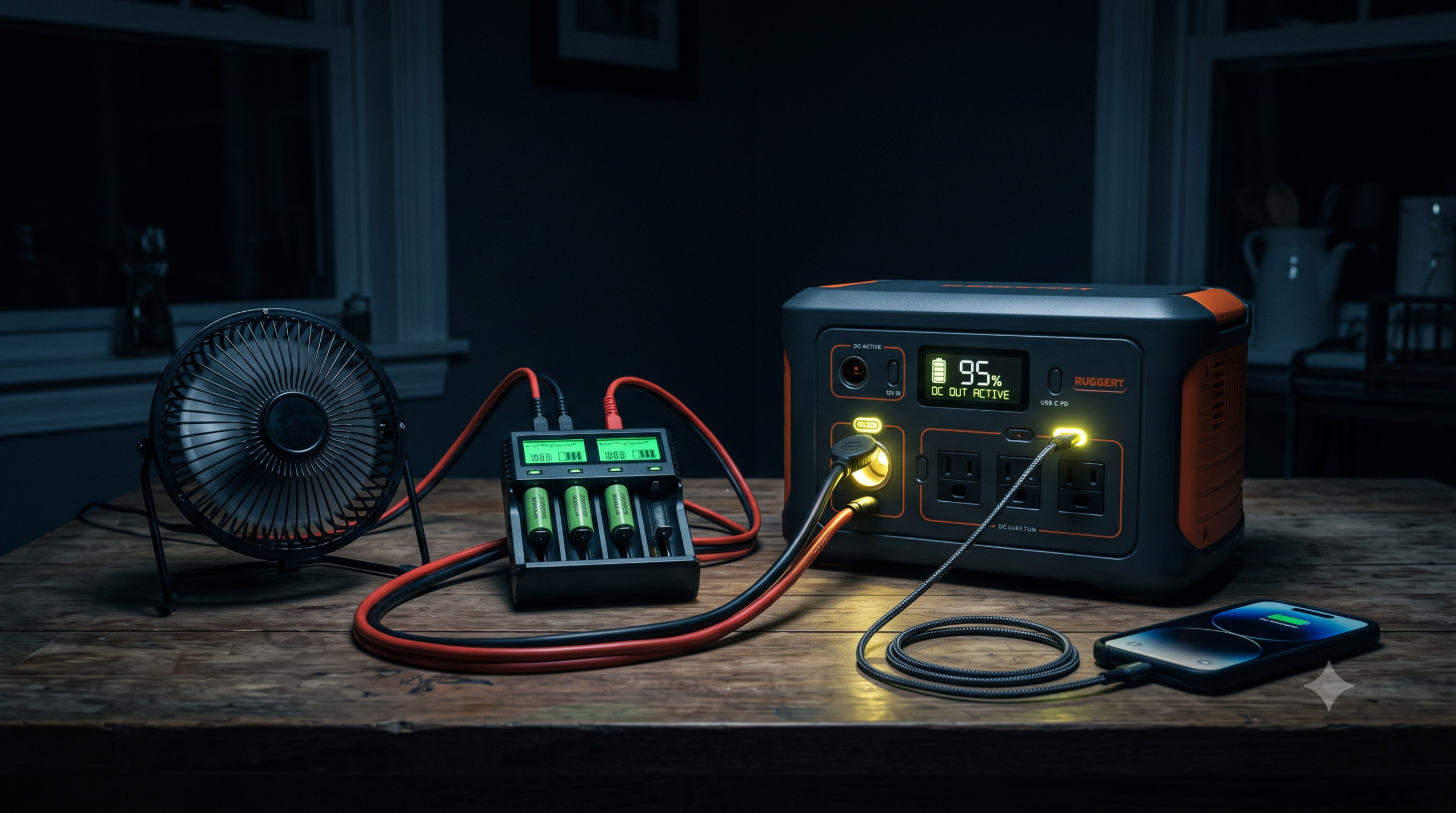
In a blackout, your portable power station is your most valuable asset. However, most users make a critical mistake: they plug everything—from smartphones to CPAP machines—directly into the AC wall outlets. While convenient, running a power station’s AC inverter for small electronic devices is incredibly wasteful. Between the energy required just to keep the inverter “awake” and the efficiency lost during electricity conversion, you could be draining your battery up to 30% faster than necessary. By switching to native DC accessories, you bypass these losses and ensure your emergency power lasts through the night.
The Technical Efficiency Gap: Why DC Wins
Understanding the physics of your power station helps you maximize every watt-hour. When you use the AC outlets on a portable power station, you are engaging a complex electronic component called an inverter.
Inverter Idle Draw (No-Load Power Consumption)
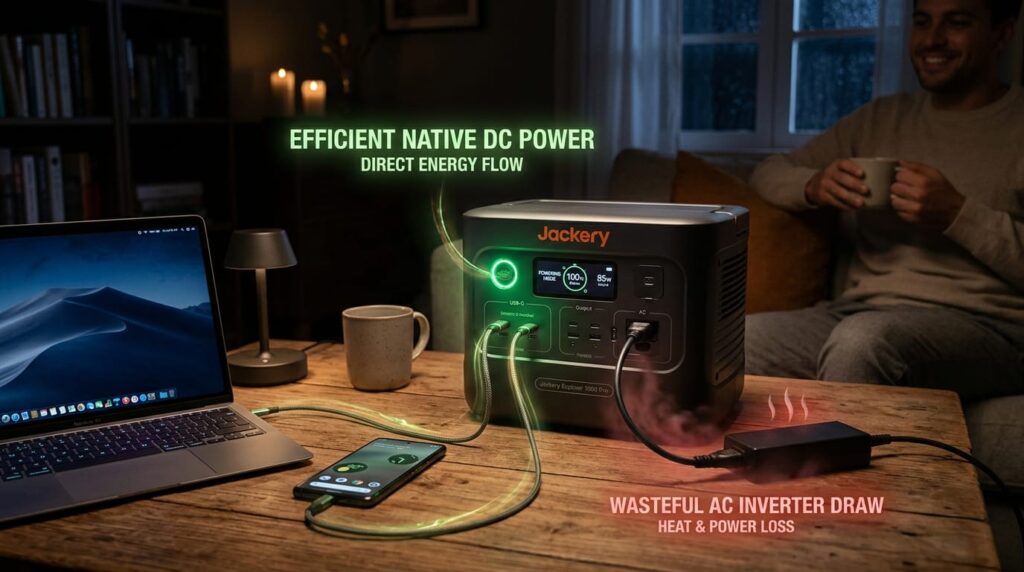
An inverter’s job is to transform the battery’s native Direct Current (DC) into Alternating Current (AC). To do this, it must constantly oscillate and monitor the output. This takes energy. Even if nothing is plugged in, a 2000W inverter might pull between 15 and 40 watts just by being turned “ON.” If you are only charging a 5-watt smartphone, you are actually pulling 20-45 watts from your battery.
Double Conversion Losses
Most small devices, like laptops or medical equipment, actually run on DC power internally. When you use an AC wall brick, you are performing “Double Conversion”: the power station converts DC to AC, and then the device’s power brick converts that AC back into DC. Each conversion step loses 10-15% of energy as heat.
Native 12V/24V DC Bus Architecture
Native DC accessories connect directly to the power station’s internal DC bus, usually via a “cigarette lighter” port or USB ports. This bypasses the inverter entirely. High-quality DC accessories utilize Buck or Boost converters, which are significantly more efficient (often 95%+) than full-scale AC inverters for low-wattage tasks.
USB-C Power Delivery (PD) Protocols
Modern USB-C PD chargers are intelligent. They negotiate specific voltage levels (5V, 9V, 15V, or 20V) directly with your laptop or phone. Using a high-output DC car charger allows you to charge a laptop natively from your power station’s 12V socket, avoiding the massive overhead of an AC inverter.
Line Resistance and Wire Gauge
When working with 12V systems, voltage drop is a serious concern. Because the voltage is low, the resistance in the wire has a larger impact. Using a high-quality, heavy-duty wire gauge (AWG) is essential to ensure that the power reaching your device hasn’t been dissipated as heat along the cable.
Anker 535 Car Charger (67W 3-Port USB-C PD DC Charger)

Why We Recommend It
This high-output DC charger allows you to charge laptops and smartphones natively from your power station’s 12V socket, avoiding the massive overhead of an AC inverter. Its intelligent PD protocols negotiate specific voltage levels directly with your device for maximum efficiency.
- Total Output: 67W
- Ports: 2x USB-C, 1x USB-A
- Compatibility: USB-C Power Delivery (PD) 3.0
Pros & Cons
- Pros: High 67W output for laptops, compact design, efficient buck/boost conversion.
- Cons: Requires a 12V cigarette lighter port, limited to three devices.
KFD 12V DC Power Adapter for ResMed AirSense 10 CPAP

Why We Recommend It
Medical equipment like CPAP machines often runs on DC internally. This adapter performs a single DC-to-DC conversion rather than the wasteful “Double Conversion” of using an AC brick, significantly extending your battery runtime through the night.
- Input: 12V-24V DC
- Output: Specific for ResMed AirSense 10
- Efficiency: High-efficiency Buck/Boost architecture
Pros & Cons
- Pros: Saves up to 30% battery compared to AC, essential for medical preparedness, reliable connection.
- Cons: Device-specific compatibility, occupies 12V port.
ICECO 16AWG Heavy-Duty 12V DC Extension Cable

Why We Recommend It
Voltage drop is a serious concern in 12V systems. This heavy-duty 16AWG cable ensures that power reaching your devices isn’t dissipated as heat along the cable, maintaining the integrity of your DC bus architecture.
- Gauge: 16AWG (Heavy-Duty)
- Length: Extension for 12V sockets
- Material: Low-resistance copper wiring
Pros & Cons
- Pros: Minimizes voltage drop, durable construction, increases gear placement flexibility.
- Cons: Bulkier than standard thin cables, limited to 12V applications.
Nitecore USM4 4-Slot QC USB Smart Battery Charger

Why We Recommend It
Highlights the Micro-USB input with QuickCharge 2.0 support (18W max), allowing users to replenish 18650/21700 Li-ion cells and AA/AAA NiMH batteries directly from USB ports or solar arrays without engaging an AC inverter. Also notes the real-time LCD screen displaying charging current, voltage, capacity, and battery health.
Key Specs:
- Input: Micro-USB (QC 2.0 Compatible, 18W Max)
- Output: 4 Independent Bays (Up to 1,500mA single slot)
- Display: High-definition LCD screen showing real-time status and health
- Compatibility: Li-ion/IMR/LiFePO4 (18650, 21700, 26650) and NiMH/NiCd (AA, AAA, C, D)
Pros & Cons:
- Pros: Real-time LCD diagnostics, native USB input bypasses AC inverters, charges both Li-ion and NiMH batteries.
- Cons: Uses Micro-USB input rather than USB-C, max charging speed requires a QC-compatible USB port.
BougeRV 12V DC Low-Draw Brushless Camp Fan
Why We Recommend It
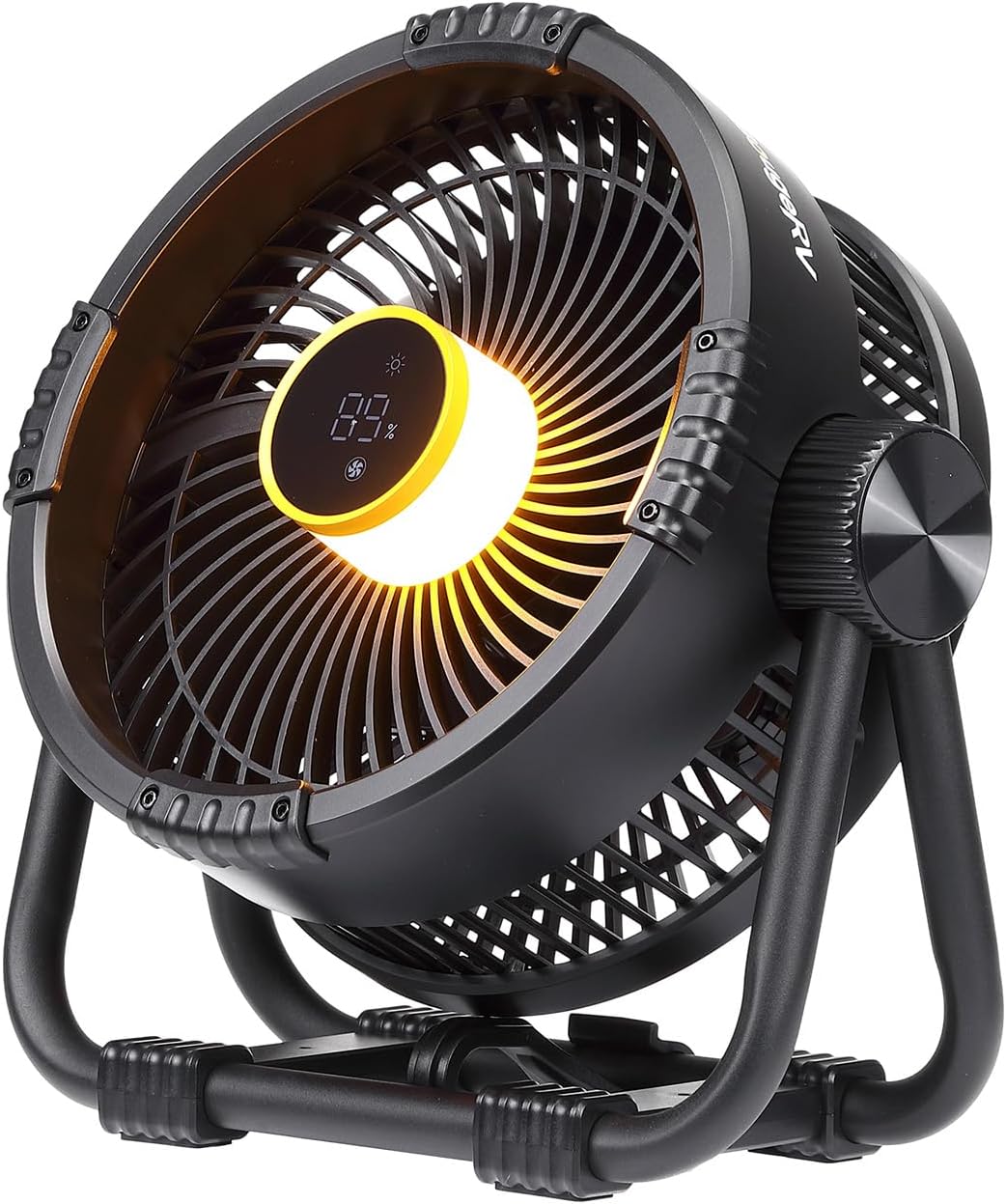
Standard household fans require AC power, but the BougeRV fan uses a high-efficiency brushless DC motor. This allows it to move a significant amount of air while drawing a fraction of the power required by an AC fan and inverter combo, making it ideal for staying cool during a summer blackout without draining your battery by morning.
Key Specs:
- Motor Type: Brushless DC (BLDC)
- Power Source: 12V DC socket
- Speed Settings: Variable stepless speed control
- Design: Compact, portable with adjustable tilt
Pros & Cons:
- Pros: Extremely low power consumption, quiet operation, variable speed control for precise airflow.
- Cons: 12V plug only (no internal battery), basic aesthetic design.
Buyer’s Guide & Summary
Choosing the right DC accessories depends on your specific emergency needs. If you rely on rechargeable flashlights or standardized cells, the Nitecore USM4 is an essential diagnostic and charging tool that operates entirely on efficient USB power. For those managing critical medical needs or climate control, prioritizing 12V native adapters for CPAPs and fans will yield the greatest increase in overall system efficiency.
| Use Case | Recommended Accessory | Primary Benefit |
| High-Power Electronics | Anker 535 DC Charger | Efficient 67W laptop charging |
| Medical Support | KFD 12V CPAP Adapter | Doubles battery runtime for CPAP |
| Battery Maintenance | Nitecore USM4 | USB-native charging for AA/18650 |
| Distance & Flexibility | ICECO 16AWG Cable | Prevents voltage sag over distance |
| Emergency Cooling | BougeRV 12V Fan | High airflow with minimal energy draw |
By shifting your most frequently used devices to native DC power, you eliminate the “inverter tax” and ensure that your limited energy reserves last as long as possible during a blackout.
Leave a Reply