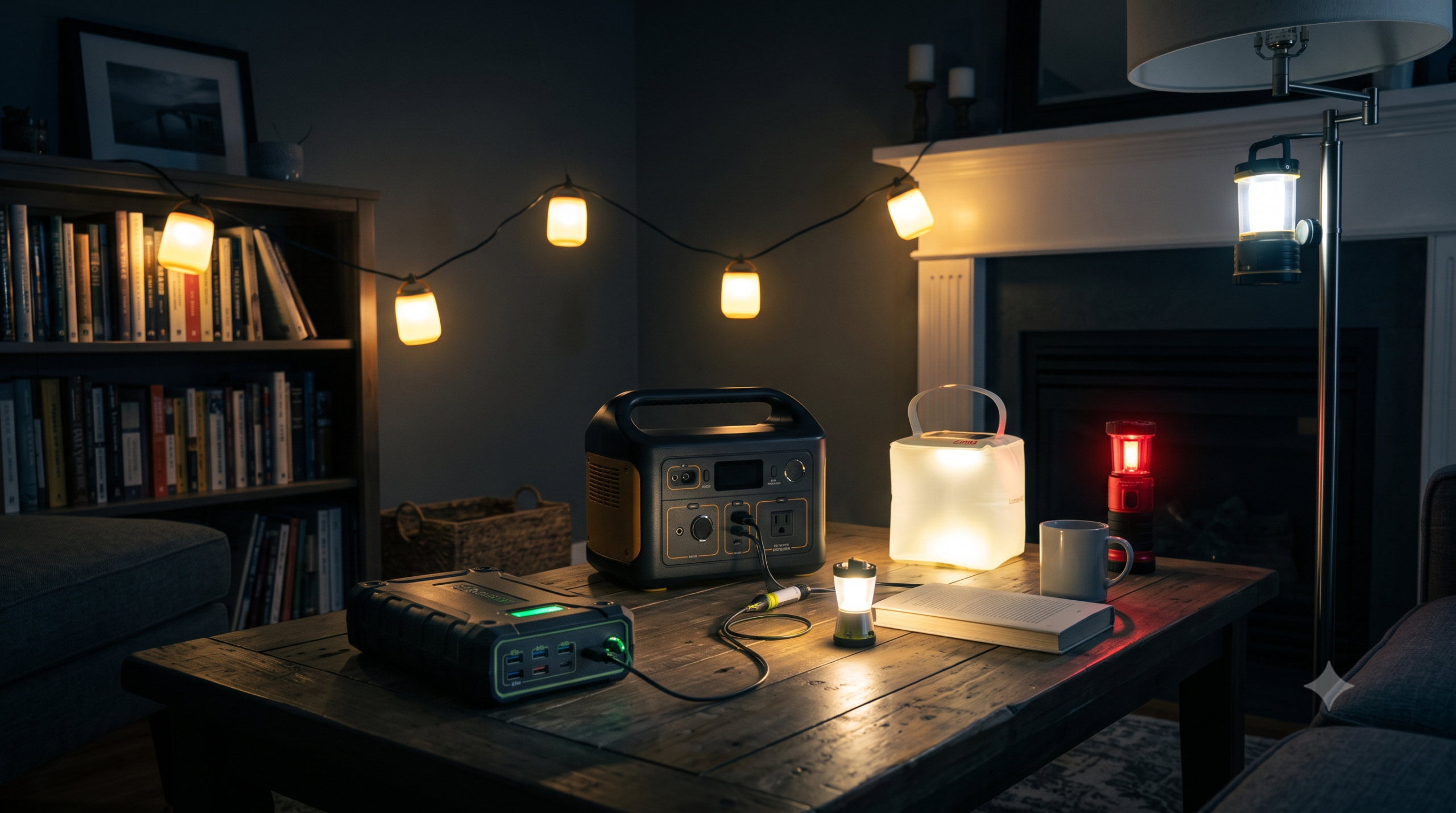
When a major storm or grid failure hits, the natural instinct is to plug standard household AC lamps into a portable power station as blackout lights. However, this is one of the most inefficient ways to manage limited energy reserves. Most portable power stations utilize an internal inverter to convert DC battery power to 120V AC. These inverters suffer from “idle draw”—consuming 5 to 15 watts of power just to stay turned on, regardless of whether the lamp is actually lit. When you add the wattage of a standard bulb, you could be draining 20W or more just to light a single corner.
In contrast, native 12V and USB-powered LED area lights bypass the inverter entirely, drawing directly from the DC ports of your battery. These ultra-low-draw lights (typically 1W–5W) provide bright, glare-free illumination that can keep your living space functional for weeks rather than days on a single charge.
If you need a lightweight, fast-charging battery bank to run these USB and 12V lights, check out our full EcoFlow RIVER 2 Review for the best entry-level budget option.
Technical Breakdown: Maximizing Blackout Efficiency
Understanding the physics of light and energy is the difference between sitting in a well-lit room for a month or sitting in the blackout dark by day three without proper lights.
Lumens vs. Lux & Color Temperature (Kelvin)
While “lumens” measures the total light output of a source, “lux” measures how that light hits a surface. For indoor emergency use, you don’t need a 10,000-lumen spotlight; you need high lux on your tabletops and floors. Color temperature is equally critical. “Daylight” LEDs (6000K) produce a harsh blue tint that can cause eye strain and disrupt sleep patterns during a stressful emergency. Warm lighting (2700K–3500K) mimics traditional incandescent bulbs, reducing glare and creating a calm environment while using the same or less energy.
Native Direct Current (DC) Efficiency
Every time you convert energy from DC (battery) to AC (wall plug), you lose roughly 10% to 20% of your power to heat. By using 5V USB or 12V DC LED drivers, you keep the energy in its native form. This allows every milliampere of your battery to go toward photons rather than heating up an inverter circuit.
Energy Consumption Math (Wh)
Calculating your runtime is simple but vital. If you use a 2W USB LED for 8 hours a night, you consume 16Wh (Watt-hours) per night. On a modest 500Wh power station, that single light could theoretically run for over 31 nights. If you used an AC lamp, that same battery might be depleted in less than 48 hours due to inverter overhead.
Ingress Protection (IP) Weather Ratings
Emergencies often involve water. An IPX4 rating means the light can handle splashes (ideal for indoor leaks), while IP65 and IP67 ratings mean the unit is dust-tight and can survive heavy rain or temporary submersion. For outdoor emergency tasks, higher IP ratings are non-negotiable.
Diffused Area Illumination vs. Directional Spotlights
Flashlights are for searching; area lights are for living. 360-degree diffused lighting scatters light evenly, eliminating the “tunnel vision” effect and harsh shadows that make a blackout feel more claustrophobic.
Goal Zero Light-a-Life Mini USB LED Lantern: Best for Modularity
Why We Recommend It
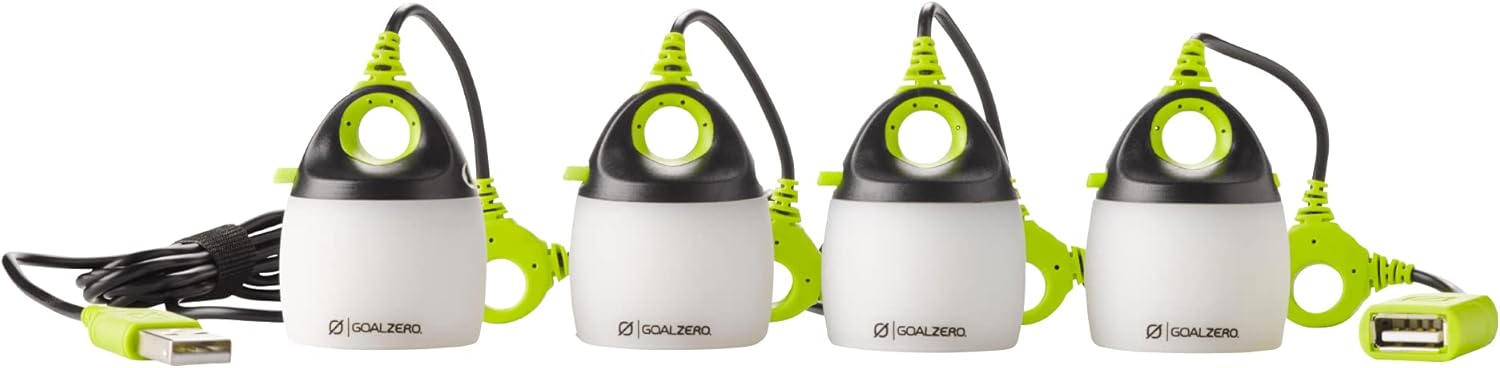
The Goal Zero Light-a-Life Mini is a masterclass in efficiency and versatility. It is designed to be daisy-chained, meaning you can run multiple lights from a single USB port to illuminate an entire long hallway or a large kitchen. It features a collapsible diffuser that allows you to switch between a focused task light and a soft area lantern.
Key Specs
- Power Draw: 1.9 Watts
- Output: 110 Lumens
- Connection: USB-A
- Daisy-chainable: Up to 4 lights
Pros & Cons
- Pro: Extremely low power draw for the light output.
- Pro: Includes colored shades for ambient or emergency signaling.
- Pro: Durable, high-quality build expected from Goal Zero.
- Con: Requires an external power source (no internal battery).
- Con: The carabiner clip is somewhat small for thick branches or pipes.
LuminAID PackLite Hero 2-in-1 Super Bloom Solar Lantern: Best for Sustainability
Why We Recommend It
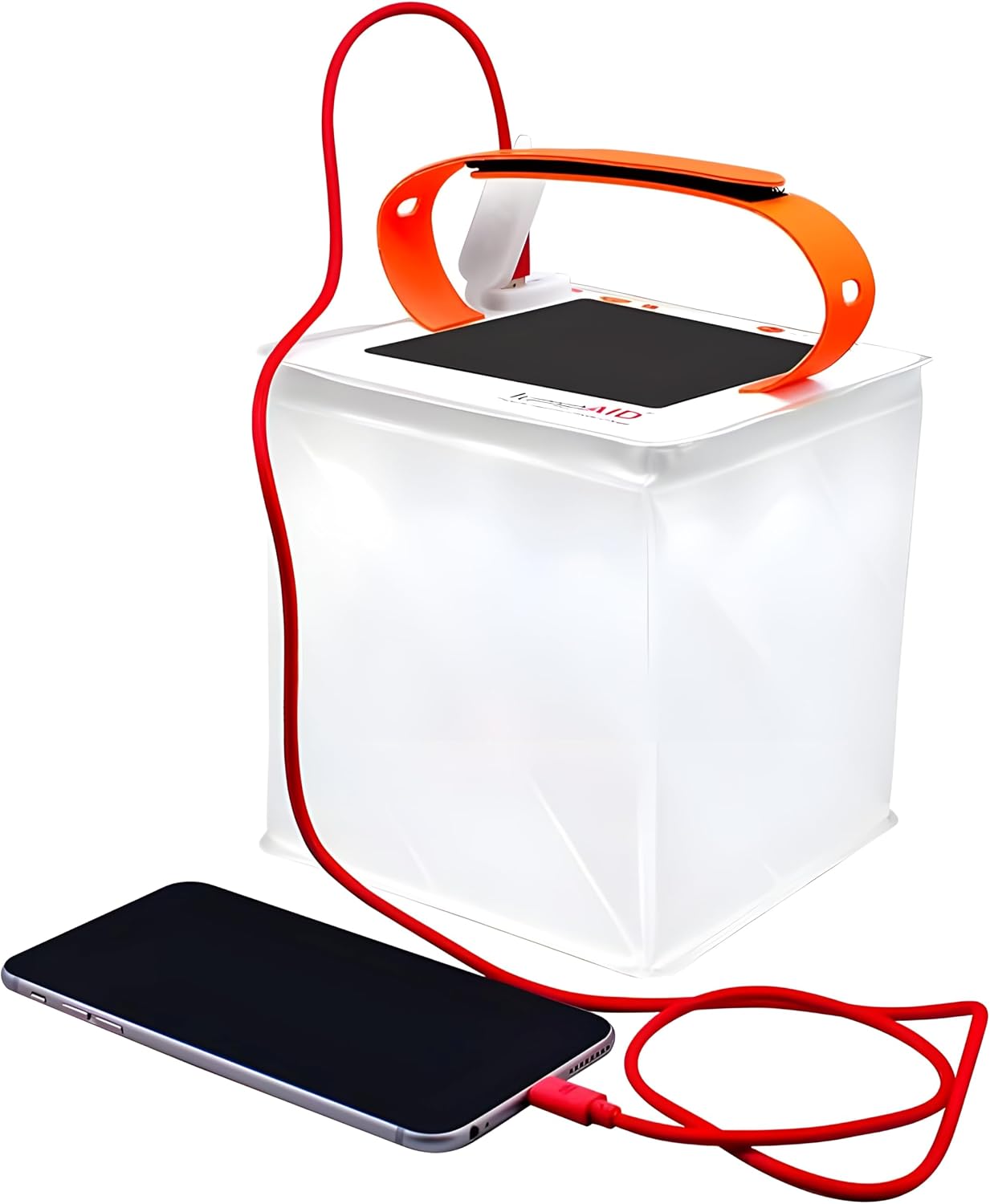
If your power station runs dry, the LuminAID is your ultimate backup. It is an inflatable, waterproof lantern that features an integrated solar panel. Because it collapses flat, it is easy to store in a bug-out bag or glove box. The “Super Bloom” model provides a massive 300 lumens, which is incredible for an inflatable unit.
Key Specs
- Power Source: Solar & USB Rechargeable
- Output: 300 Lumens (Max)
- Waterproof Rating: IP67 (Floats)
- Run Time: Up to 100 hours on Low
Pros & Cons
- Pro: It floats and is completely waterproof, perfect for flood scenarios.
- Pro: Can charge your phone in a pinch via the 2000mAh battery.
- Pro: Takes up virtually no space when deflated.
- Con: Solar charging is slow (needs about 16-20 hours of direct sun).
- Con: The plastic material can become brittle over many years of UV exposure.
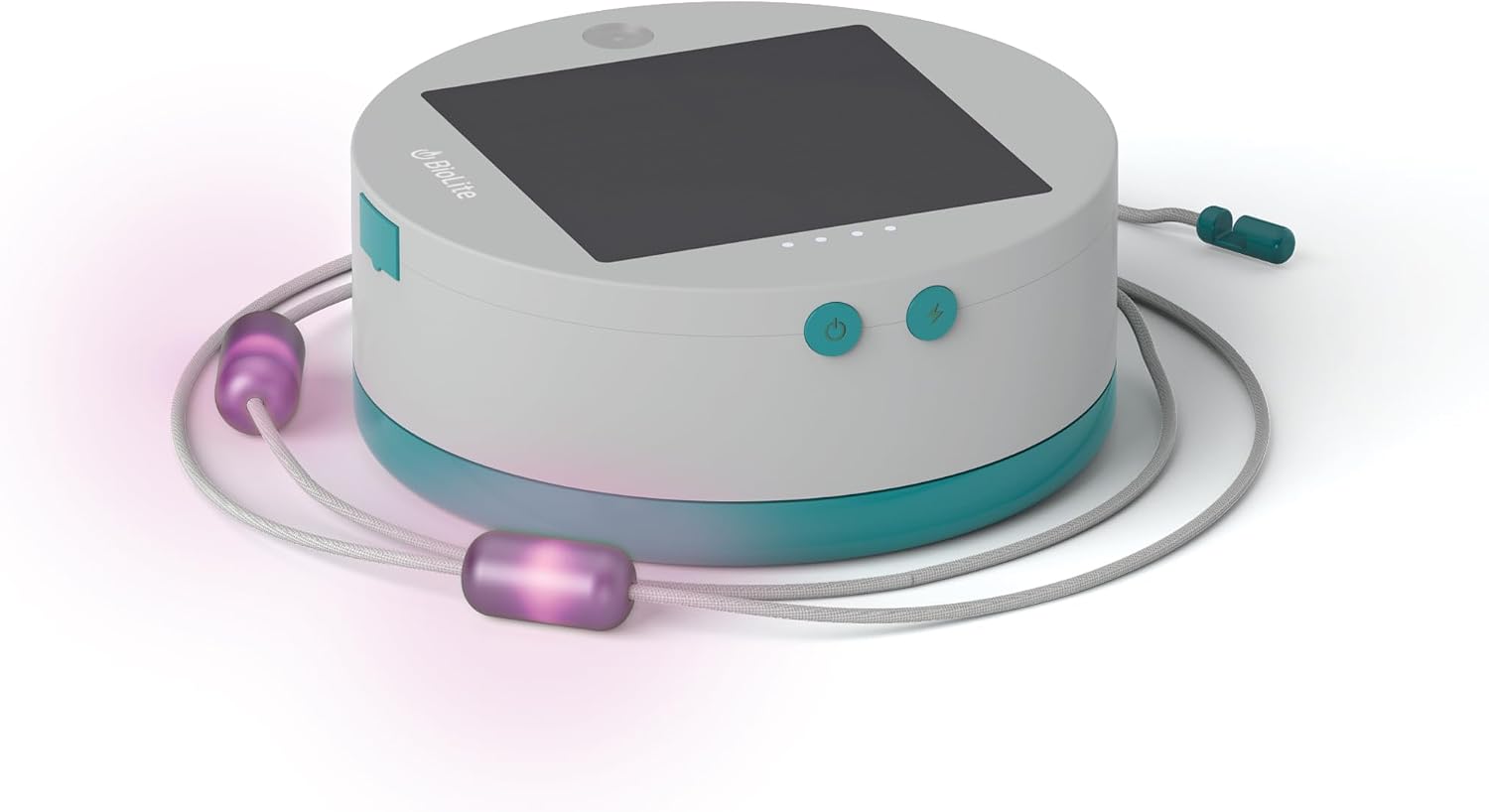
BioLite SiteLight String XL (18 ft Version): Best for Large Room Coverage
Why We Recommend It
Lighting a whole room from a single point often creates dark corners. The BioLite SiteLight String XL solves this by providing 15 feet of cord with two large, overhead-style lamps. They produce a soft, dimmable glow that makes an emergency feel much more like a comfortable evening at home.
Key Specs
- Power Draw: 2.5 Watts (Total)
- Output: 150 Lumens per light
- Cord Length: 18 feet (2 large overhead collapsible globe lights)
- Weight: 3.2 oz
Pros & Cons
- Pro: Excellent for “lighting the edges” of a room to eliminate shadows.
- Pro: Very lightweight and packs down into a small nested unit.
- Pro: Compatible with BioLite’s wider SiteLight ecosystem.
- Con: The thin wires can get tangled if not packed carefully.
- Con: Not designed for heavy rain or extreme outdoor use.
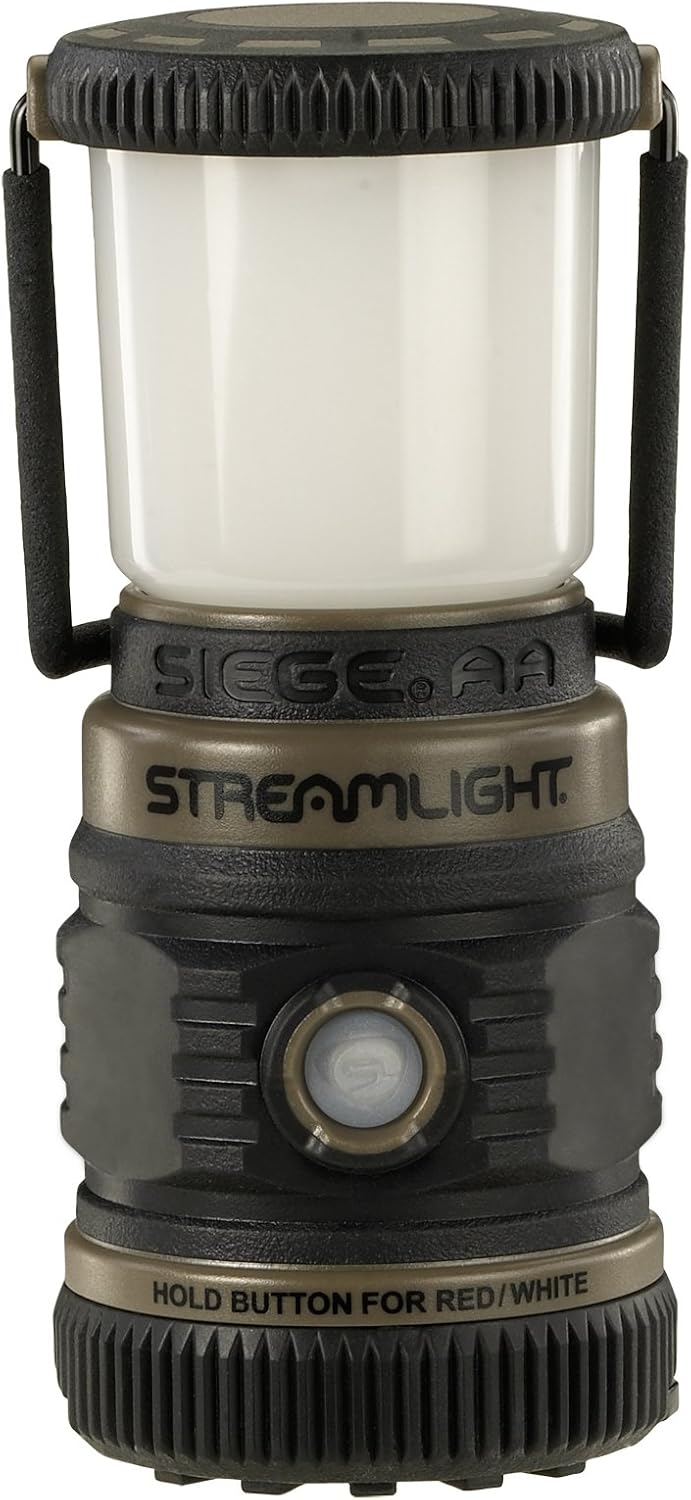
Streamlight 44931 Siege AA Ultra-Compact LED Lantern: Most Rugged
Why We Recommend It
For those who prefer traditional batteries over USB, the Streamlight Siege AA is the gold standard. It is incredibly tough, featuring a rubber-molded base and a polycarbonate lens. It runs on three AA batteries, which are easy to stockpile, and it features a red LED mode to preserve night vision.
Key Specs
- Power Source: 3 AA Alkaline batteries
- Output: 200 Lumens
- IP Rating: IPX7 (Waterproof to 1m)
- Run Time: 37 hours on Low
Pros & Cons
- Pro: Indestructible build quality; it can survive a 2-meter drop.
- Pro: Red light mode is perfect for reading maps without waking others.
- Pro: Removable globe allows it to hang upside down like a lightbulb.
- Con: Relying on alkaline batteries can be expensive in the long run.
- Con: Heavier than the USB-powered alternatives.
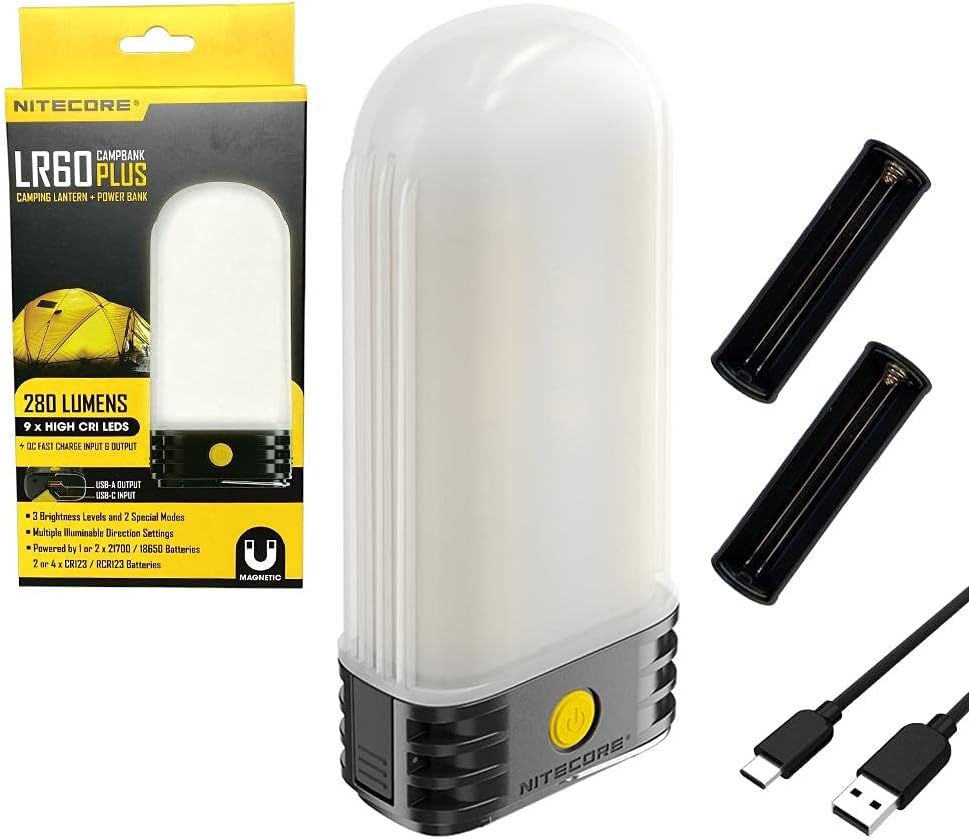
Nitecore LR60 3-in-1 Camp Lantern & Battery Charger: Best Multi-Tool
Why We Recommend It
The Nitecore LR60 is a versatile powerhouse. It serves as a high-CRI (Color Rendering Index) lantern that shows colors accurately, a battery charger for 18650/21700 cells, and a power bank. It even features a magnetic base, allowing you to stick it to a refrigerator or the underside of a car hood.
Key Specs
- Output: 280 Lumens
- CRI Rating: >90 (High color accuracy)
- Charging: USB-C Input/Output
- Features: Magnetic base and metal hook
Pros & Cons
- Pro: High CRI light is much easier on the eyes for reading or medical tasks.
- Pro: Serves as a charger for your other high-performance flashlight batteries.
- Pro: Multiple directional lighting modes (top only, side only).
- Con: Does not include batteries (must buy 18650 or 21700 cells separately).
- Con: Interface can be slightly complex with multiple button-press patterns.
Buyer’s Guide & Summary
Choosing the right light depends on your primary concern—whether it is maximum runtime, ease of use, or durability.
| Scenario | Recommended Product | Why? |
| Whole House Coverage | BioLite SiteLight String XL | Best for spreading light across wide areas. |
| Floods / Wet Weather | LuminAID PackLite Hero | IP67 rated and floats; solar charging is vital. |
| Long-term Grid Down | Goal Zero Light-a-Life Mini | Most efficient draw for use with power stations. |
| Hard-use / Physical Shock | Streamlight Siege AA | Practically indestructible and uses common batteries. |
| Tech-Centric Setup | Nitecore LR60 | Best for users with existing lithium-ion battery stocks. |
Bonus: Best USB-Powered Lights for Camping & Bug-Out Bags
When you need to transition your blackout setup from the living room to a rugged campsite or emergency bug-out bag, footprint and power efficiency become your top metrics. Standard battery-operated lanterns are bulky and burn through expensive disposable cells. The ultimate off-grid hack is combining a low-draw, plug-and-play camping USB light with a portable power reserve.
Using a simple, high-efficiency 5V USB LED bulb or a flexible USB-powered tent light string allows you to illuminate an entire shelter while drawing negligible wattage. Because these emergency lights require so little energy to keep running through the night, you can skip the massive solar generators. Instead, pair them directly with one of our field-tested best power banks for camping to establish a lightweight, highly mobile lighting system that packs flat and stays illuminated for days on a single charge.
In summary, for the best balance of efficiency and cost, look for USB-powered area blackout lights that offer warm color temperatures and low wattage. By moving away from AC lamps and toward native DC lighting, you can turn a weekend-sized power station into a month-long emergency survival hub.
Because these low-draw USB camp lights run for days on minimal wattage, pair them with one of our tested best power banks for camping to keep your camp illuminated indefinitely.”
Website: https://offgridwatts.com
Direct Support: admin@offgridwatts.com
Leave a Reply