
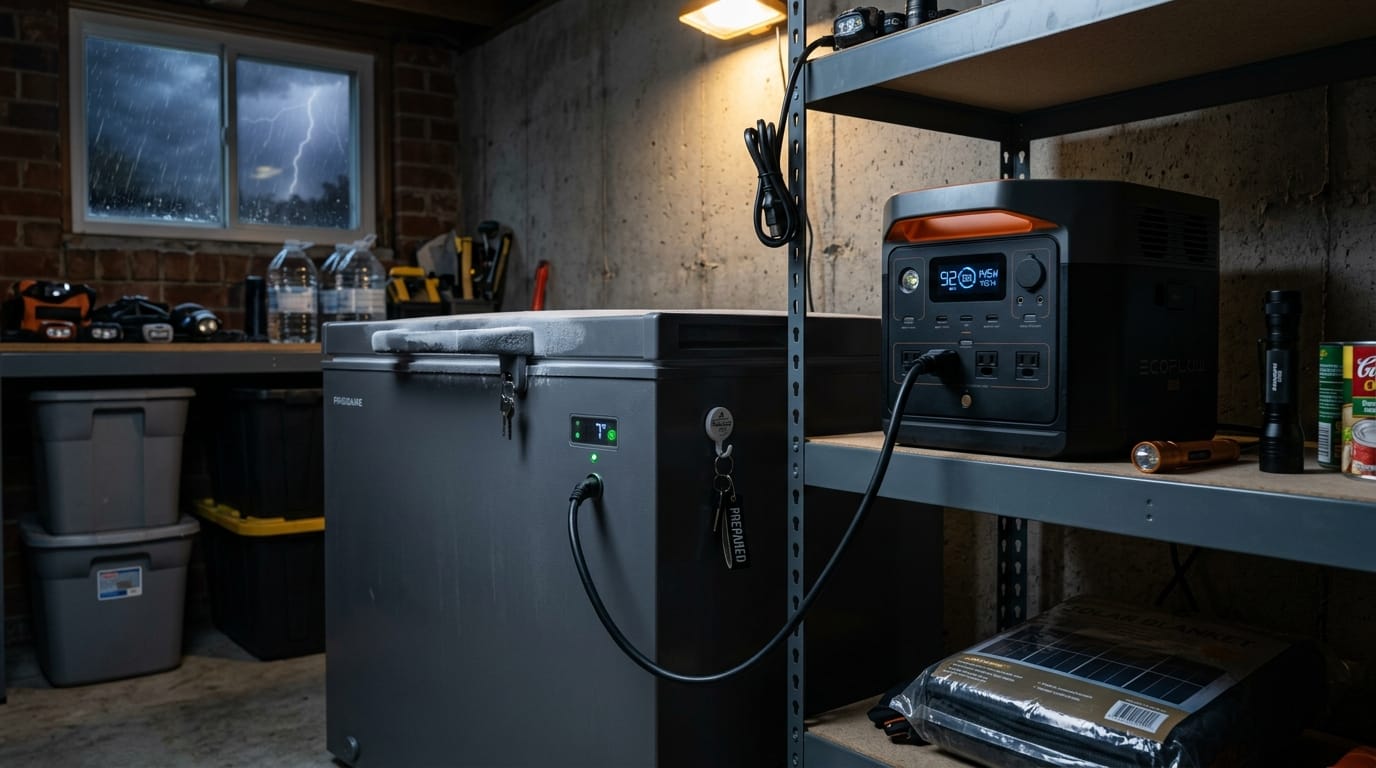
The sudden silence of a power outage can quickly turn into the expensive reality of a spoiled deep freezer. Thousands of dollars in food, meticulously stocked for emergencies or long-term savings, can be lost in a matter of hours. This isn’t just about inconvenience; it’s about financial hit, wasted effort, and compromised food security. The key to preventing this catastrophic loss lies in understanding your freezer’s power demands, particularly its compressor surge wattage versus its running wattage, and matching it with a reliable portable power station.
Calculating Your Freezer’s Power Needs
Successfully powering a deep freezer off-grid requires precise calculations. You need to account for two critical power metrics:
Running Wattage
This is the continuous power your freezer consumes once its compressor is actively cooling. This value is generally lower and more stable.
Starting (Surge) Wattage
How to Calculate for Your Freezer:
- Check the Label: Most freezers have a label inside the door or on the back that lists voltage (V) and amperage (A).
- Running Watts (Approximate): V x A = Running Watts (e.g., 120V x 1.5A = 180W). Note that this is a continuous draw.
- Compressor Surge Watts (Estimated): Multiply your running wattage by a factor of 2 to 3. For a 180W running freezer, the surge could be 360W to 540W.
- Use a Kill-a-Watt Meter: For precise measurements, plug your freezer into a Kill-a-Watt meter for 24-48 hours. This will record actual running wattage, peak surge wattage, and total Watt-hours (Wh) consumed. This is invaluable data for accurate sizing.
The Power Budgeting Sheet:
To ensure you don’t overlook any critical details, it’s highly recommended to utilize a comprehensive power budgeting sheet. This tool helps you list all essential appliances, their running and surge wattages, and their expected runtimes, allowing you to accurately estimate your total energy requirements and size your power station accordingly.
Top 3 Portable Power Stations to Keep Your Deep Freezer Running (2026 Picks)
Choosing the right portable power station means balancing capacity, output, and features with your specific needs and budget. Here are our top three picks for 2026, categorized by their ideal use cases.
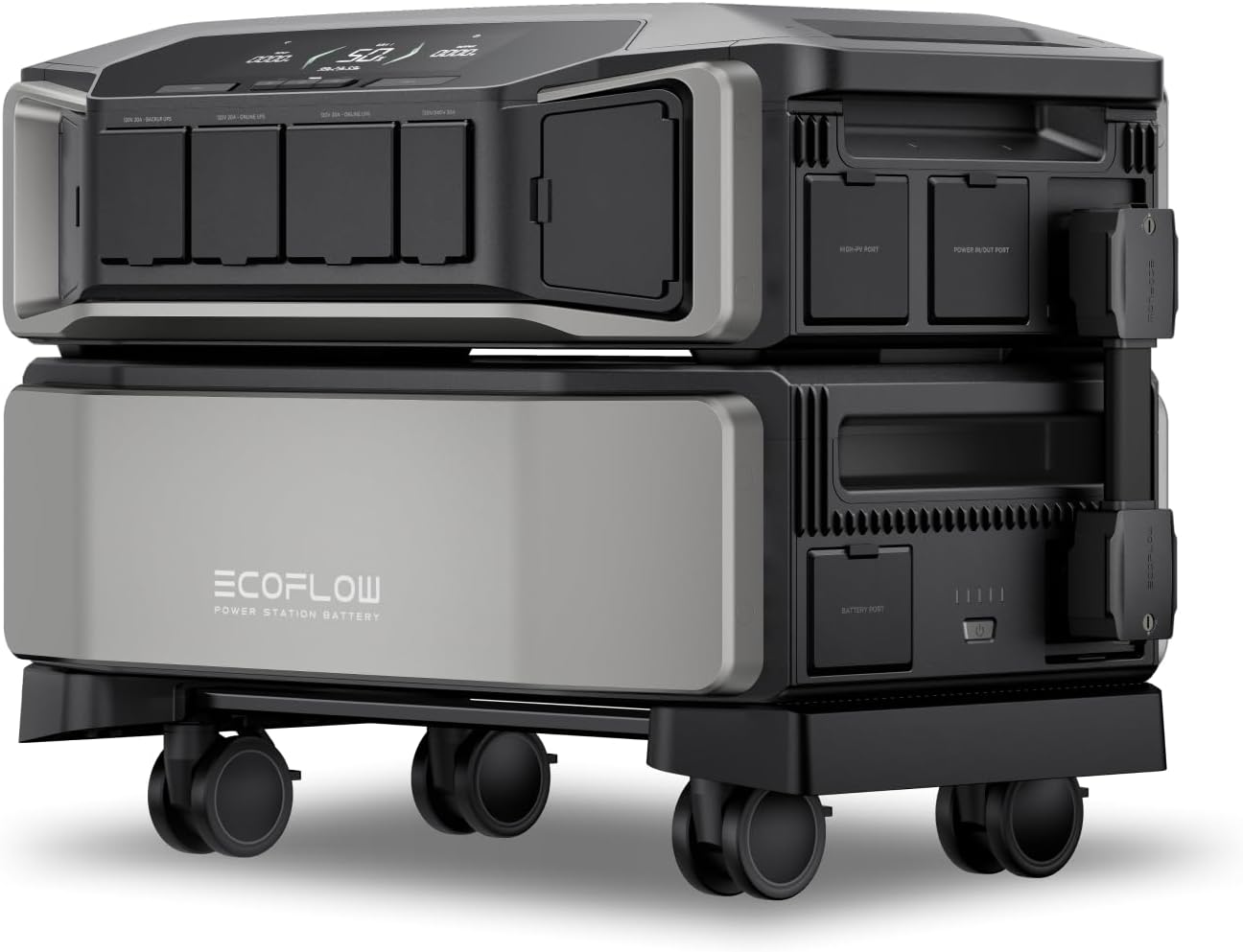
Heavy-Duty Workhorse: EcoFlow Delta Pro Ultra
- Ideal Use Case: Whole-home backup, extended outages, multiple large appliances, or as a primary off-grid power source.
- Pros:
- Massive Capacity: Boasts an enormous LFP battery, providing days of power for a typical deep freezer. Expandable with extra batteries for even longer durations.
- Incredible Output: Features a robust pure sine wave inverter capable of handling extreme compressor surge wattages, easily starting and running most residential deep freezers and even large refrigerators.
- Rapid Recharging: Supports multiple fast charging methods, including AC, solar, and EV charging, ensuring minimal downtime.
- Smart Home Integration: Can integrate with home electrical systems (with a transfer switch/smart panel) for seamless automatic backup.
- Durability: Built for rugged use, making it suitable for both home and remote applications.
- Cons:
- High Cost: Significant upfront investment, making it less accessible for budget-conscious users.
- Weight & Portability: Extremely heavy and bulky, limiting its portability to wheeled transport.
Why it’s a Top Pick: When reliability, capacity, and raw power output are non-negotiable, the EcoFlow Delta Pro Ultra stands alone. It’s an investment in serious energy independence.
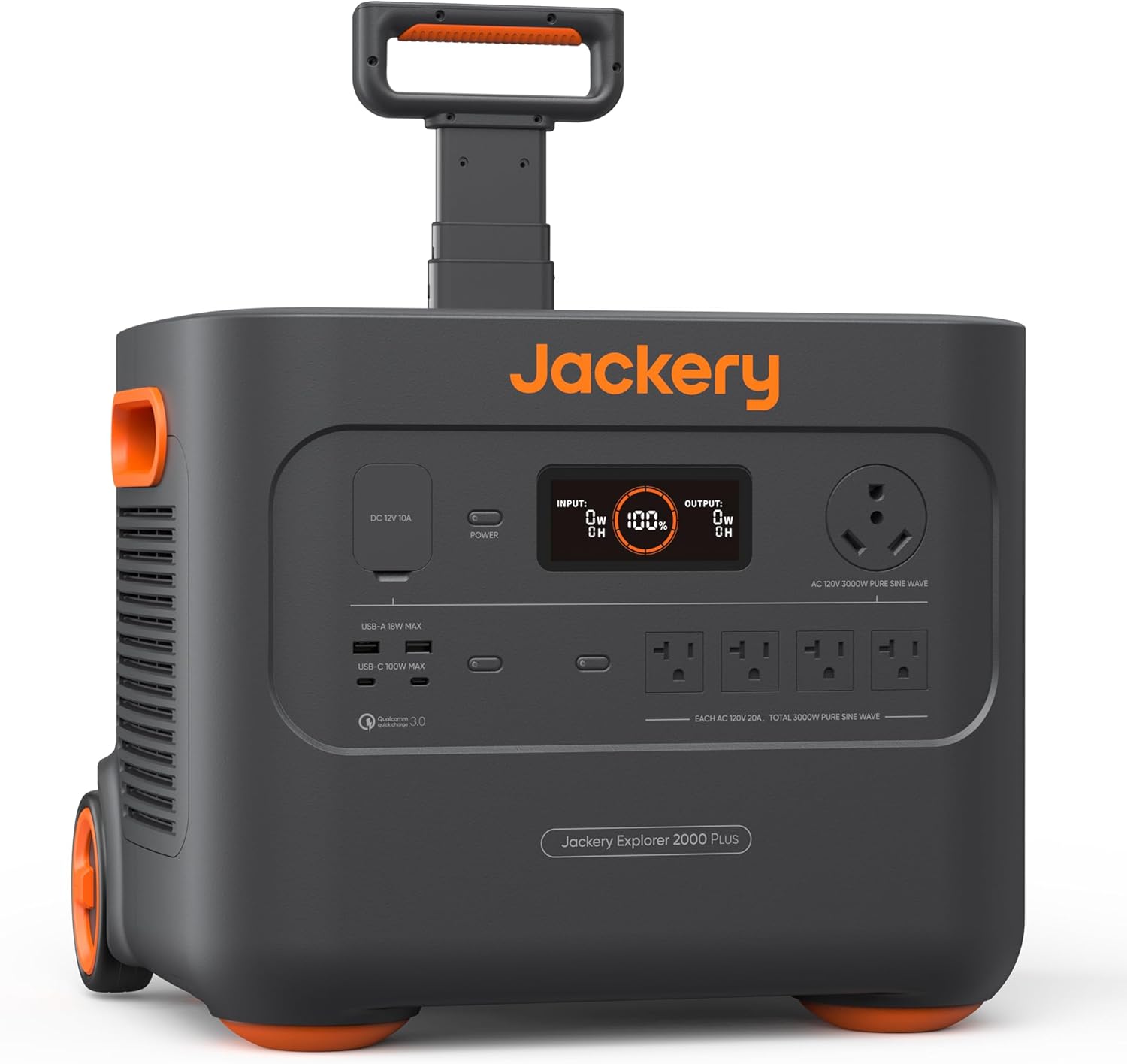
Mid-Range Value King: Jackery Explorer 2000 Pro
- Ideal Use Case: Medium-to-long outages, single deep freezer plus essential electronics, camping, or RV use.
- Pros:
- Excellent Capacity: Offers ample capacity (around 2000Wh) to keep a deep freezer running for a full day or more, depending on usage.
- Strong Inverter: Its 2200W (4400W peak) pure sine wave inverter can handle the surge of most standard deep freezers.
- Balanced Portability: Lighter and more manageable than the Delta Pro Ultra, with a built-in handle for easier transport.
- Versatile Charging: Supports fast wall charging and robust solar input, providing flexible recharging options.
- Reputable Brand: Jackery is known for quality and customer support.
- Cons:
- Battery Chemistry: Typically uses NMC cells, which have a shorter cycle life compared to LFP, though still very durable for emergency use.
- Less Expandable: Not as modular or expandable as higher-end systems.
- Why it’s a Top Pick: The Jackery Explorer 2000 Pro hits a sweet spot between performance, features, and price, offering serious freezer backup capabilities without breaking the bank.
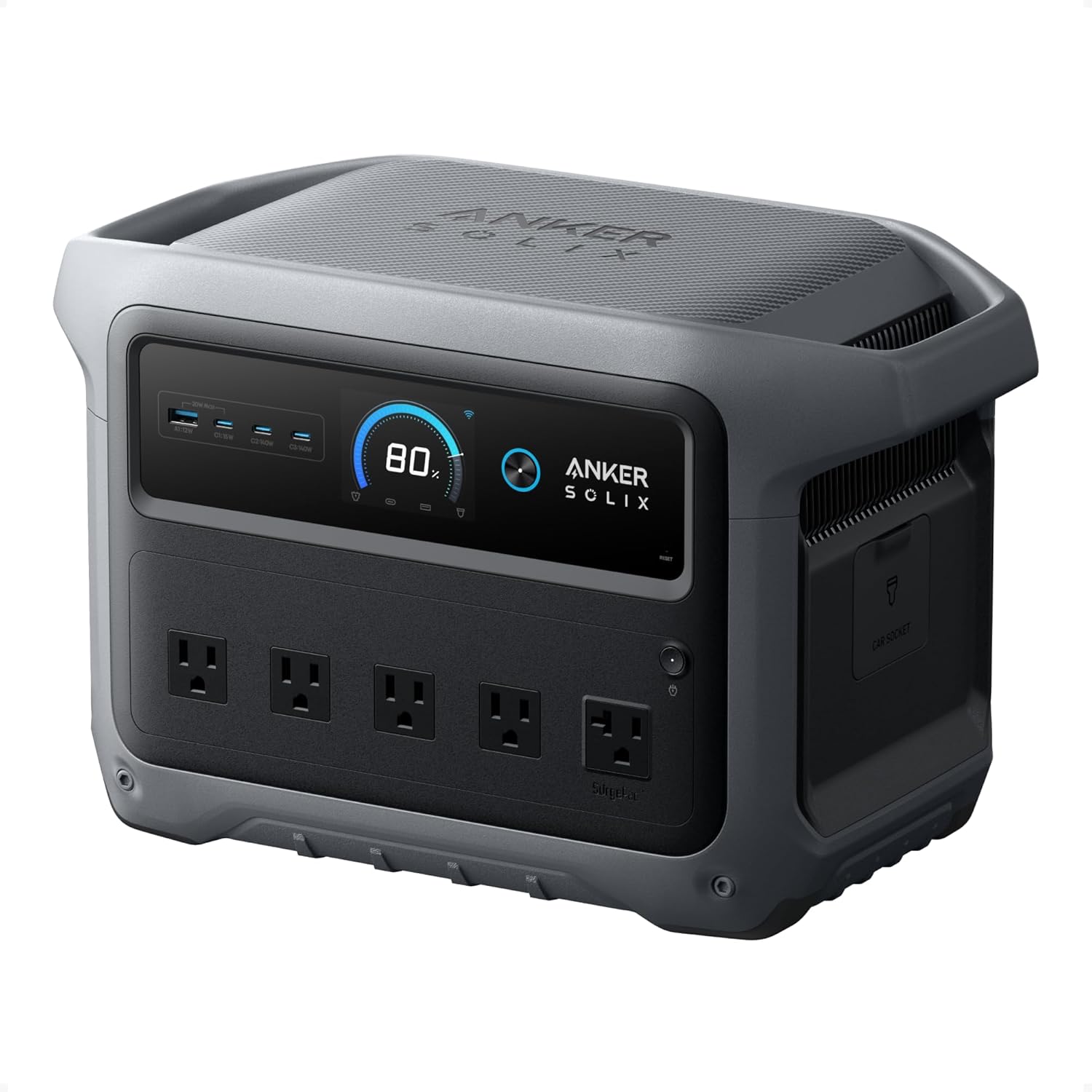
Compact Budget Backup: Anker SOLIX C1000 Gen 2 Portable Power Station
- Ideal Use Case: Short-term outages (12-24 hours), standard deep freezers, powering critical home backup essentials, or easy grab-and-go portability.
- Pros:
- Compact and Lightweight: Weighs just under 25 pounds and is designed to be easily carried and stored out of the way.
- Surge Handling Power: Features a continuous 2,000W output with a 3,000W peak surge, easily handling compressor motor start-ups.
- Ultra-Fast Recharging: Fully recharges from a wall outlet in just 49 minutes using HyperFlash technology.
- Long-Lasting LFP Battery: Utilizes durable LiFePO4 battery chemistry rated for 4,000 cycles while retaining at least 80% capacity.
- Cons:
- Fixed Capacity: Offers 1,024Wh, meaning it is built for targeted short-term backup rather than multi-day whole-home loads.
- No Expansion Support: This particular Gen 2 unit is a standalone model and cannot be wired to extra modular battery packs.
- Why it’s a Top Pick: For an accessible, highly reliable entry-to-mid tier backup that won’t strain your back or your wallet, the Anker SOLIX C1000 Gen 2 Portable Power Station delivers exceptional performance.
Pro-Tips for Freezer Preservation During an Outage
- Thermal Mass is Your Friend: Fill empty spaces in your freezer with frozen water jugs, ice packs, or even blocks of ice. The more thermal mass, the longer the internal temperature will remain stable.
- Minimize Door Openings: Every time you open the freezer door, precious cold air escapes, and warm air enters. Develop a plan for retrieving essentials quickly or consolidate items to minimize access.
- Insulate from the Outside (Optional): During prolonged outages, you can wrap the exterior of your freezer with blankets, sleeping bags, or insulating tarps to add an extra layer of thermal protection. Ensure not to block any vents if the freezer is running on backup power.
- Monitor Temperature: Use a simple, battery-operated freezer thermometer to keep track of the internal temperature. Aim to keep it below 0°F (-18°C) as long as possible. Food typically remains safe for 24-48 hours in a full, unopened freezer and 12-24 hours in a half-full one.
- Pre-Cool Your Freezer: If you anticipate an outage (e.g., during a severe weather warning), lower your freezer’s thermostat setting to its coldest point for 24 hours prior. This will build up a “cold reserve.”
Conclusion: Safeguard Your Investment and Your Peace of Mind
Protecting your deep freezer during a power outage is a proactive step that safeguards not only your food investment but also your peace of mind. By accurately assessing your power needs, investing in a reliable portable power station, and implementing smart preservation strategies, you can confidently weather any grid failure. Don’t wait for the lights to go out to realize the true cost of unpreparedness.
Ready to build your ultimate emergency power plan? Grab our free 72-hour Emergency Power Toolkit and Calculator below to get started!
Leave a Reply