
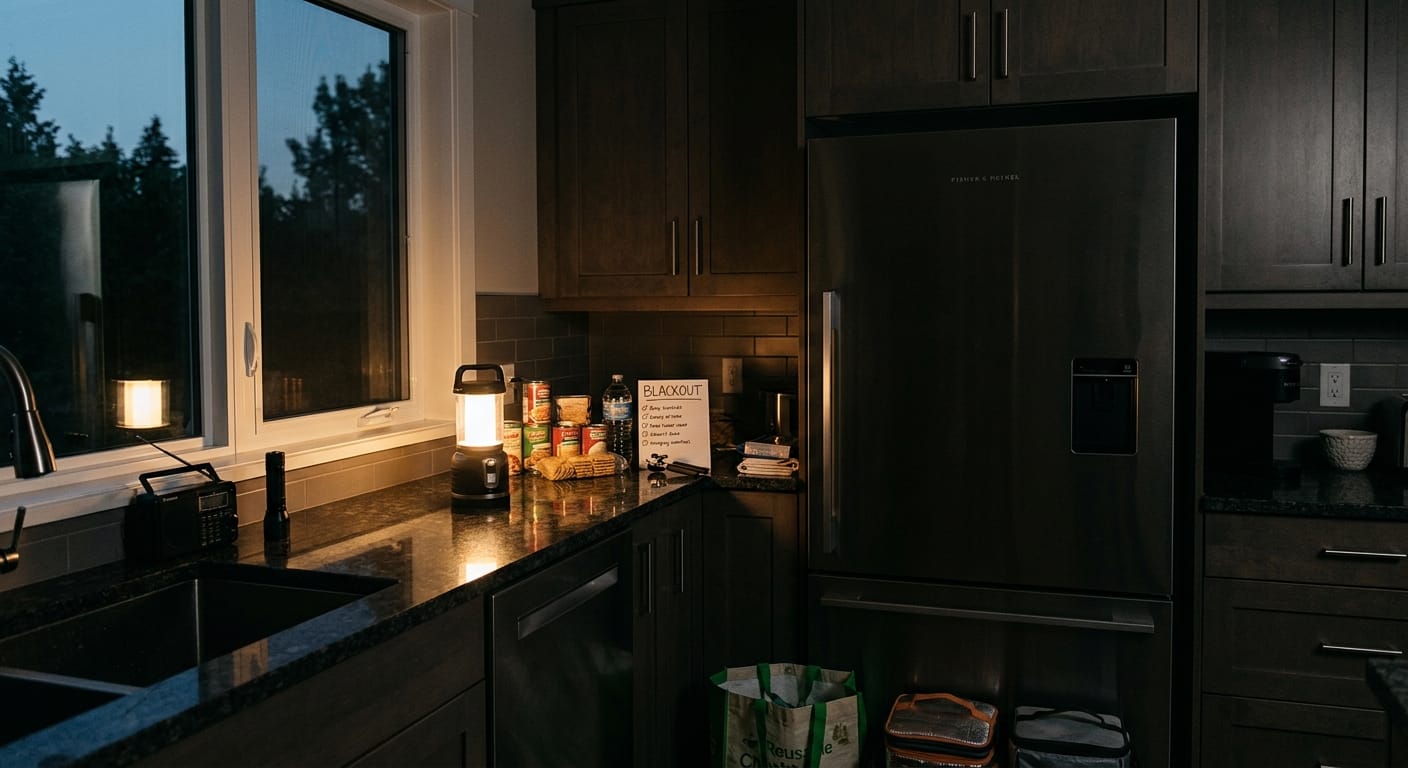
When grid power fails, your first instinct is likely plugging your kitchen refrigerator straight into a portable power station and walking away.
That single move is the fastest way to kill your backup battery.
If you want to know how to keep fridge cold during power outage conditions without draining your reserves by morning, you must abandon the standard residential mindset. A full-sized household refrigerator does not need uninterrupted electrical current to maintain food safety; it needs strict thermal discipline. Leaving your solar generator’s AC inverter running 24/7 bleeds power needlessly, killing a standard 1,000Wh battery bank in under 10 hours.
Here is how to deploy duty cycling, eliminate phantom loads, and stretch your backup power from half a day to over 72 hours.
1. The 24/7 Inverter Trap: The Math Draining Your Battery
Most homeowners drastically misunderstand how a modern refrigerator consumes energy.
A standard residential refrigerator relies on an inductive compressor motor. Starting that motor demands a momentary startup surge between 800W and 1,200W lasting a fraction of a second. Once spinning, the compressor settles into an active running draw of 80W to 150W depending on ambient kitchen temperature and compressor size.
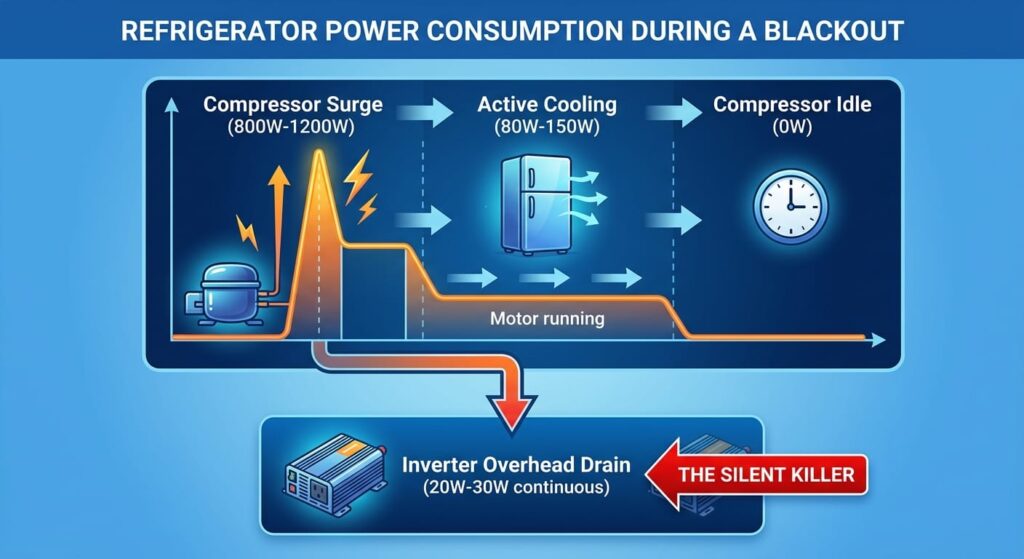
The primary threat to your runtime is not the compressor. It is your power station’s pure sine wave inverter.
To provide wall current, the inverter converts low-voltage DC from internal lithium cells into 120V AC. Simply keeping that inverter circuit energized burns an idle draw of 20W to 30W every single hour, regardless of whether the refrigerator is actively cooling.
Over a 24-hour window, the idle inverter burns 480Wh to 720Wh of capacity solely to stay awake. When combined with a standard 30% to 40% compressor duty cycle, a 1,000Wh power station delivers only 8 to 10 hours of real-world support before triggering low-voltage cutoff.
This silent inverter loss isn’t unique to kitchen appliances—it drains critical medical setups, fans, and routers just as quickly. Check out our breakdown of 5 proven emergency blackout accessories that will save your life to see the native DC bypass tools that eliminate inverter overhead entirely.
2. The Duty-Cycle Hack: 30 Minutes On, 90 Minutes Off
A closed, modern refrigerator is essentially an insulated cooler with a mechanical chiller attached. Once brought to temperature, it sheds heat slowly—provided the door seals remain shut.
Instead of running continuous power, implement a 30/90 duty cycle:
- 30 Minutes Active: Power the refrigerator via your generator, allowing the compressor to pull internal temps down to 34°F–36°F.
- 90 Minutes Inactive: Power the inverter completely off. The appliance acts as a passive cold vault.
This cadence limits mechanical runtime to roughly 6 hours per day while dropping the inverter’s idle footprint to zero for 18 hours. Internal temperatures fluctuate safely between 35°F and 39°F, remaining securely below the critical USDA 40°F bacterial danger threshold. By rationing runtime, you slash total energy consumption by over 60%, stretching a 1,000Wh battery across three full days.
3. Three Blackout Accessories Under $25
Executing this strategy requires precision control. These three low-cost tools eliminate guesswork:
1. Wireless Digital Refrigerator & Freezer Thermometer (~$18–$23)
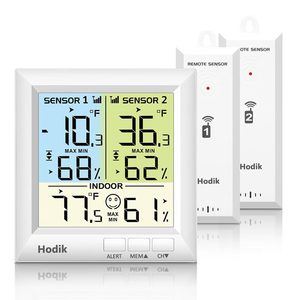
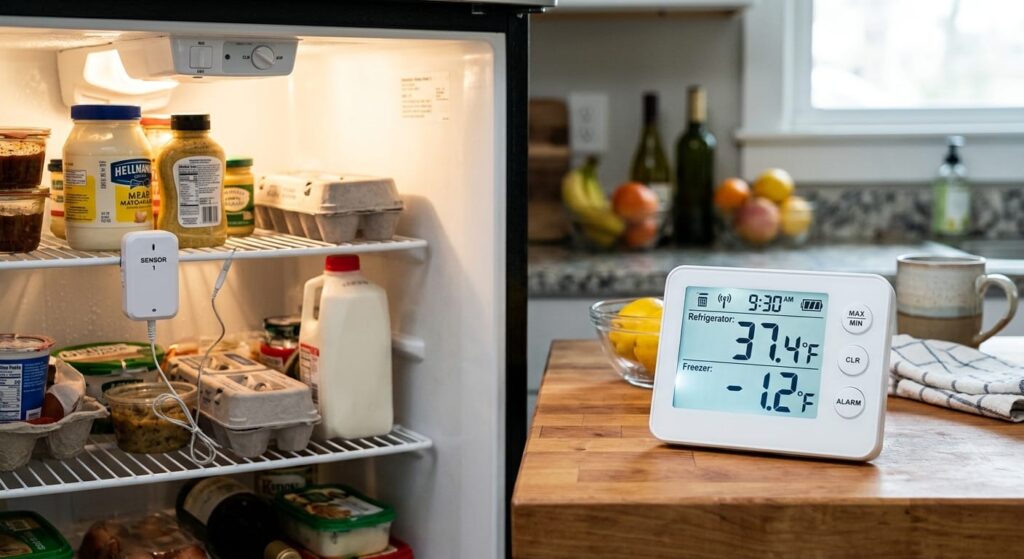
- The Tactical Advantage: Opening the refrigerator door dumps dense, cold air out the bottom instantly, accelerating temperature rise. A wireless dual-sensor unit stays sealed inside while the external LCD display sits on your counter, providing continuous temperature readouts and programmable high-temp alarms. Comes with two sensors for two refrigerators or freezers.
2. Heavy-Duty Mechanical Appliance Timer Plug (~$9–$13)
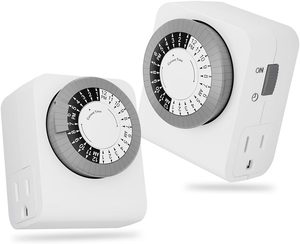
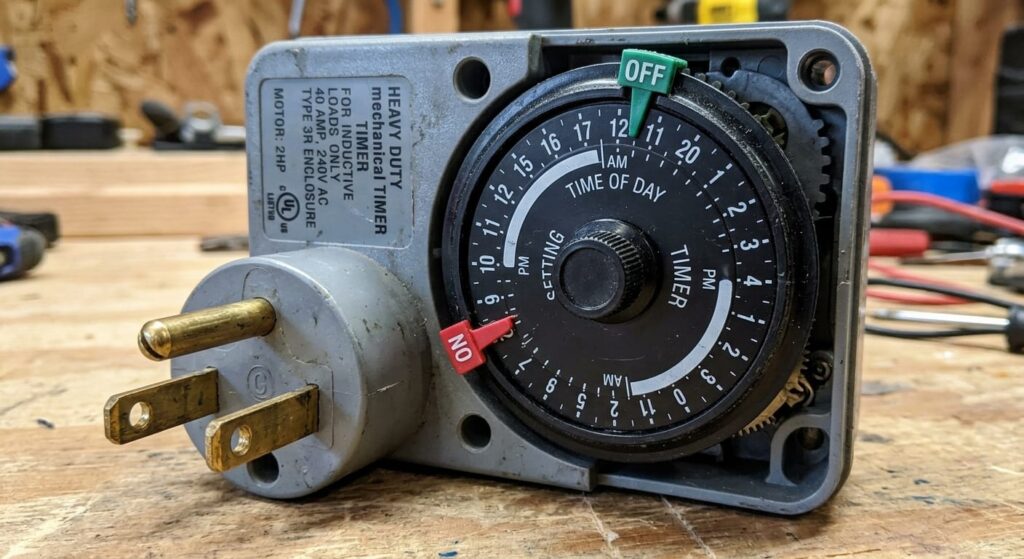
- The Tactical Advantage: Forget manual switching or flaky smart plugs that rely on home Wi-Fi routers. A mechanical pin timer handles inductive loads safely and automates 30-minute cooling pulses every two hours without requiring user input or a network connection. This particular option includes two timers for a great price.
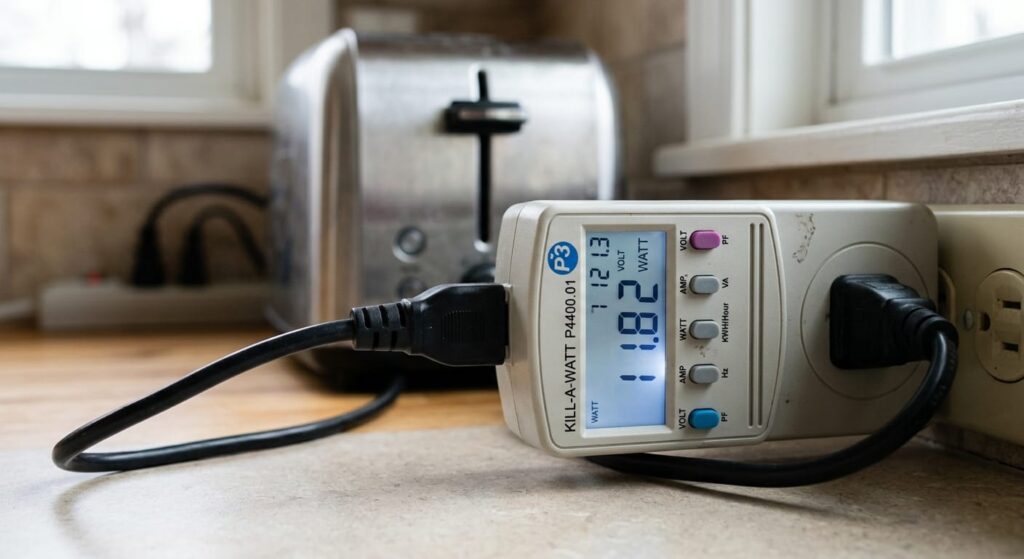
3. Inline Kill-A-Watt Style Power Meter (~$12–$16)
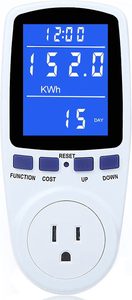
- The Tactical Advantage: Factory energy stickers report broad annual averages, not real-time telemetry. Placing an inline wattage meter on your fridge before storm season reveals exact baseline running wattage, peak inductive surge, and power factor, giving you the hard data needed to calculate your battery reserves.
4. Power Strategy Comparison
Here is how power demands compare over a 24-hour period on a typical 1,000Wh (lithium iron phosphate) power station supporting an 18 cu. ft. refrigerator:
| Power Management Strategy | Average Continuous Draw | Usable Daily Energy Consumed | Total Runtime (1,000Wh Station) |
|---|---|---|---|
| 24/7 Inverter Connection | ~55W–70W (incl. idle losses) | 1,320Wh – 1,680Wh | ~8 to 10 Hours |
| Duty Cycle (30 On / 90 Off) | ~18W–22W effective | 430Wh – 530Wh | ~48 to 60+ Hours |
5. Critical Food Safety Checkpoints
- Thermal Bridging via Dead Air Space: Air has poor thermal mass and warms rapidly. Fill every open void in your freezer and lower refrigerator shelves with tightly packed, frozen 1-gallon water jugs. Dense ice blocks serve as thermal ballast, absorbing ambient heat bleed when power is switched off.
- The Coin-on-a-Cup Fail-Safe: Freeze a plastic cup of water solid, place a coin flat on top of the ice, and leave it in your freezer. If you return to find the coin resting at the bottom of the cup, the compartment fully thawed and refroze, signaling that internal food is spoiled and unsafe to consume.
- Relocation Thresholds: If internal refrigerator temperatures rise past 38°F and external power is completely depleted, immediately move high-risk proteins, dairy, and eggs into a rotomolded cooler surrounded by remaining freezer ice packs. Sacrificing the refrigerator box keeps critical consumables chilled for another 48 hours.
Surviving extended outages comes down to active monitoring rather than raw battery capacity. Manage your thermal envelope intelligently and cut inverter idle waste, and a modest portable power station will keep your food preserved indefinitely.
If you are preparing for a multi-day storm event where cooling and basic appliances must run concurrently, review our complete hurricane blackout survival guide to prioritize device sequencing and preserve remaining watt-hours.
Leave a Reply