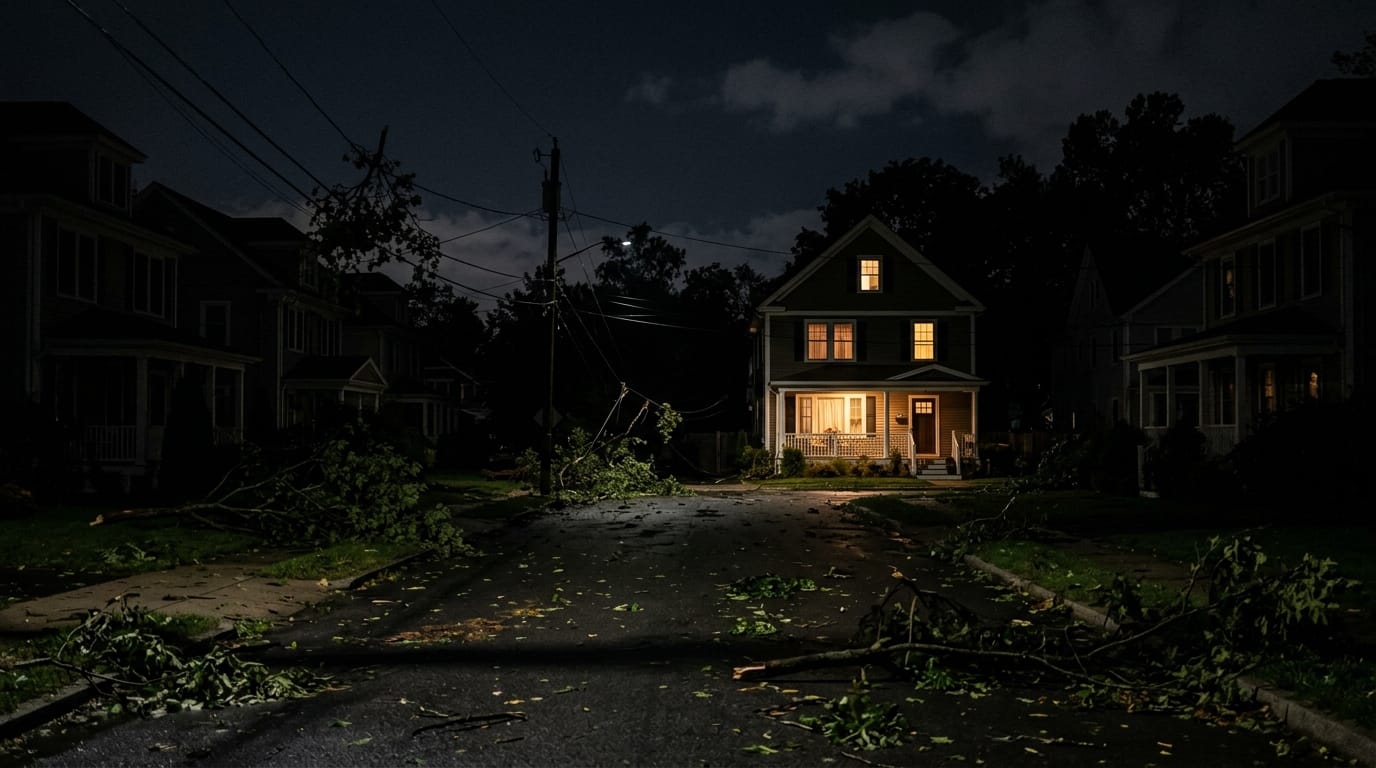
When a Category 3 hurricane makes landfall, the municipal power grid is often the first casualty.
However, transmission towers collapse.
Substations flood, and crews can’t operate until winds drop below tropical storm thresholds.
In major storms, grid restoration routinely stretches from seven to fourteen days.
This leaves communities in darkness and suffocating post-storm humidity.
Traditional gas-powered generators are the instinctive choice for many homeowners.
However, they introduce severe logistical bottlenecks during outages.
Local service stations lose pumping capability or run out of gasoline within 24 hours.
That creates miles-long queues and fuel rationing.
Worse, operating combustion engines during volatile weather risks carbon monoxide poisoning and loud noise.
These factors can broadcast your location to the neighborhood.
A better option is outlined in the hurricane blackout power guide.
At Off Grid Watts, we advocate for a tactical, tiered off-grid power strategy built on silent LiFePO4 battery systems and high-efficiency DC loads. By understanding the electrical dynamics of your essential appliances, you can maintain refrigeration, communications, light, and airflow without burning a single gallon of fuel. This hurricane blackout power guide reveals five field-tested power secrets our team uses to keep critical household infrastructure running indefinitely.
Secret 1 – Calculate Starting Surge vs. Running Watts for Full-Sized Refrigerators
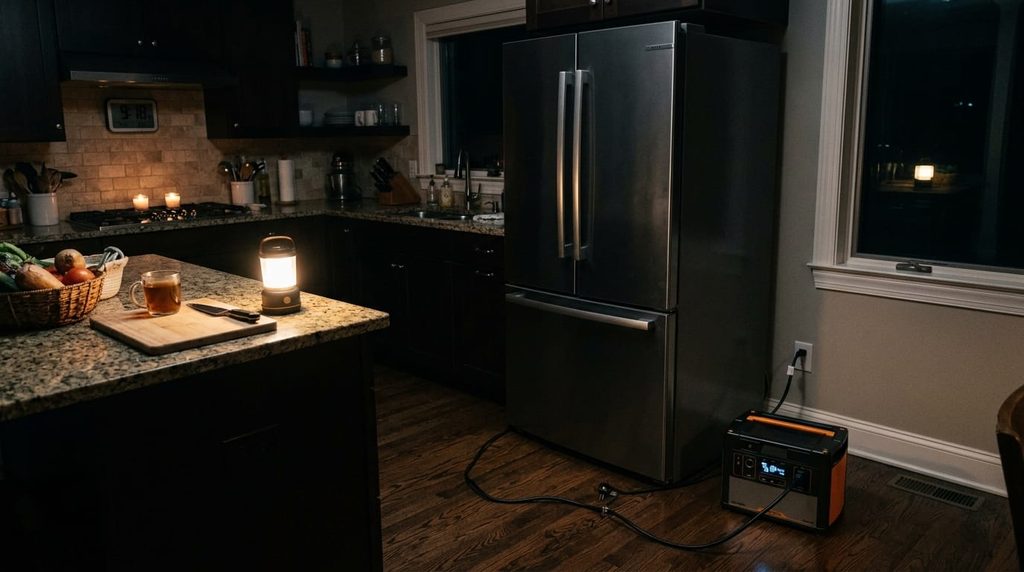
Food preservation is the highest electrical hurdle in any extended blackout. Homeowners frequently check the yellow EnergyGuide tag on their kitchen refrigerator, see a rating of 120W, and assume a small 300W power station will run it without issue. That math overlooks the initial inductive kick the compressor motor requires.
A modern 22–28 cubic foot refrigerator draws between 100W and 150W during continuous running cycles.
The compressor startup demands an instantaneous surge of 800W to 1,200W for roughly 100 to 300 milliseconds.
Additionally, if your portable power station has an inverter rated below 1,000W continuous, it may trip the safety circuitry.
This is covered in the Primary Focus Keyphrase (Set this in AIOSEO): hurricane blackout power guide.
Stretch your stored kilowatt-hours across multiple days. Our team utilizes the “Duty Cycle” battery hack (Primary Focus Keyphrase (Set this in AIOSEO): hurricane blackout power guide).
A modern, well-insulated refrigerator retains safe internal food temperatures below 40°F (4.4°C) for up to 4 hours.
If the door remains completely sealed, temperatures stay safe.
Additionally, plugging the refrigerator into your power station for 30 minutes every 2 hours lowers the temperature into the safe zone.
This approach reduces cumulative battery consumption by over 60%.
In our storm bench testing, running a full-sized refrigerator continuously drained a 1,024Wh battery in just under 8.5 hours. This was due to defrost cycles and inverter overhead. Applying the 30-minute duty cycle extended that identical battery’s operational window to 26.5 hours on a single charge. This gives you ample time to replenish the battery bank with solar inputs the following morning.
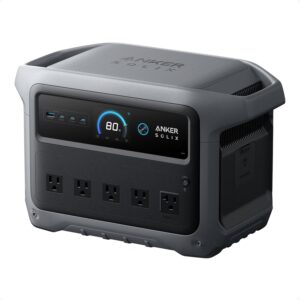
Is The New Anker SOLIX C1000 Gen 2 the Best Home Backup Generator?
Secret 2 – Power Home Wi-Fi & Internet Directly via 12V DC (Bypass the AC Inverter)
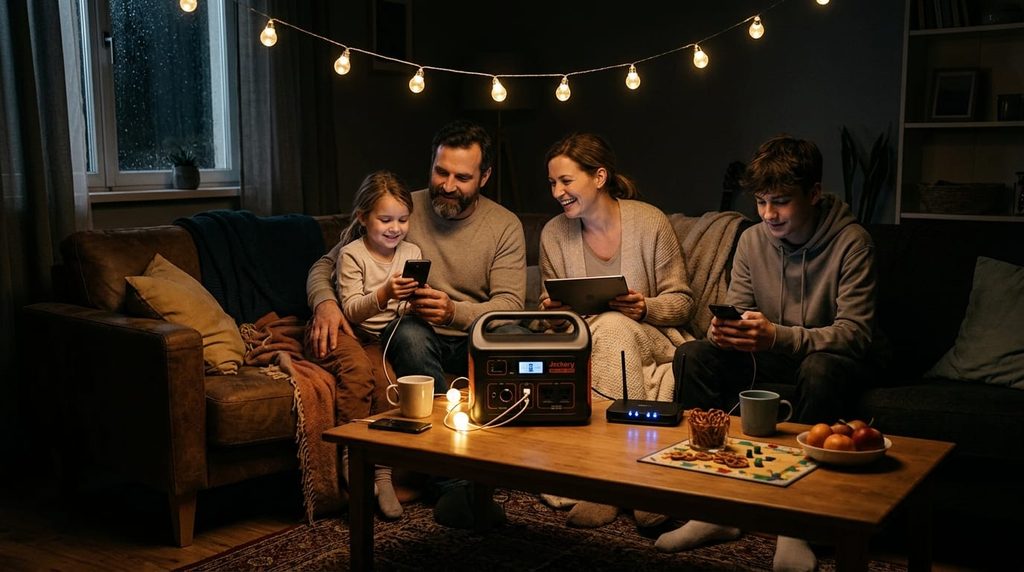
When storm winds knock out cell towers, fiber-optic broadband often remains fully operational underground if your home equipment has power. However, plugging your home router and fiber Optical Network Terminal (ONT) into a standard 120V AC wall outlet on a power station is remarkably inefficient. The internal AC inverter consumes an idle draw of 15W to 25W simply keeping its circuitry active, regardless of how small the connected load is.
If your Wi-Fi router draws 10W and the fiber ONT draws 8W, running them through a 120V AC inverter imposes a total continuous draw of 33W to 43W. Over a 24-hour blackout window, that conversion overhead wastes between 360Wh and 600Wh of critical battery storage entirely as parasitic heat. That is roughly 30% to 50% of a standard 1,000Wh power station’s usable capacity lost to idle inverter inefficiency.
The solution is bypassing the inverter entirely by utilizing direct 12V DC output ports. Nearly all residential Wi-Fi routers and fiber ONTs operate natively on 12V DC power supplied through a standard 5.5mm x 2.1mm or 5.5mm x 2.5mm barrel plug. By using an inexpensive 12V DC auxiliary adapter cable or a USB-C Power Delivery (PD) 12V trigger cable, you can feed power straight from the station’s DC bus.
Our storm bench testing demonstrated this by powering a dual-band Wi-Fi router and fiber ONT over direct 12V DC. As a result, the system lowered total power consumption from 38W AC down to just 14.2W DC. A compact 256Wh LiFePO4 power bank kept our team’s home communications network fully operational for 18 continuous hours, compared to barely 6.5 hours over AC.
Secret 3 – Ultra-Low-Draw LED Lighting Arrays over Traditional Flashlights
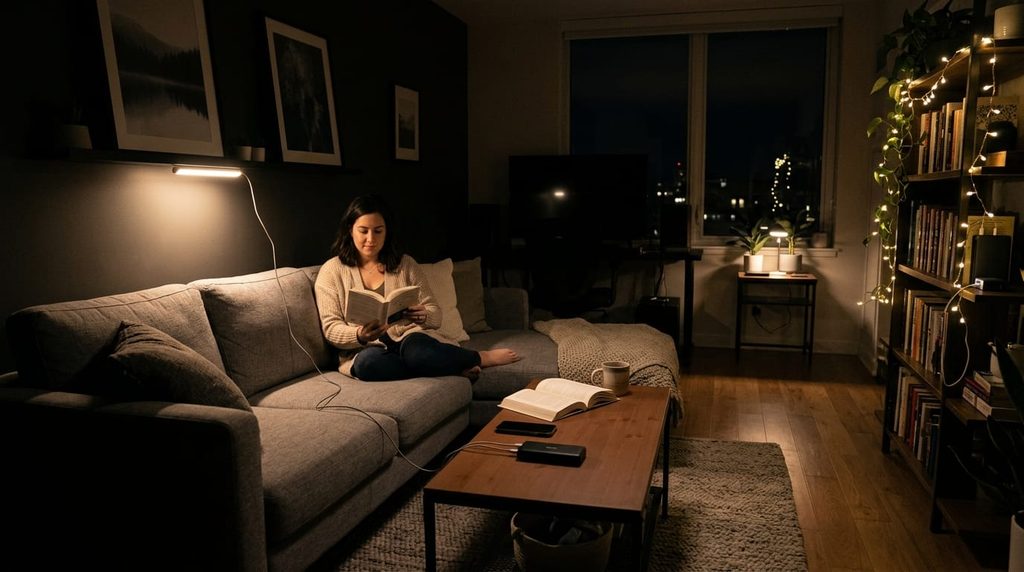
High-output tactical flashlights and standard incandescent camping lanterns create harsh shadows and rapidly exhaust disposable alkaline cells. Furthermore, standard 120V AC household lamps waste precious watt-hours through inverter conversion and oversized bulbs. Effective emergency illumination should provide soft, ambient room coverage while sipping milliwatts.
We recommend deploying distributed 5V USB LED lighting arrays, such as low-voltage light bars, USB warm-white filament bulbs, or flexible LED rope lights. These lights draw between 0.5W and 2W per fixture while producing 100 to 250 lumens of glare-free ambient lighting that easily illuminates an entire living room or kitchen prep area.
Because these lights operate on standard 5V DC USB ports, they run directly from portable phone power banks without engaging any large inverters. A standard 10,000mAh (37Wh) pocket battery pack will power a 1W USB LED reading light for over 30 continuous hours. For specific tested bulbs that run for 50+ hours on pocket power packs, check our guide on 5 essential low-draw blackout lights under $50 to build out your family emergency lighting kit.
Secret 4 – Managing Extreme Summer Heat: 12V & USB-C Evaporative/Circulation Fans
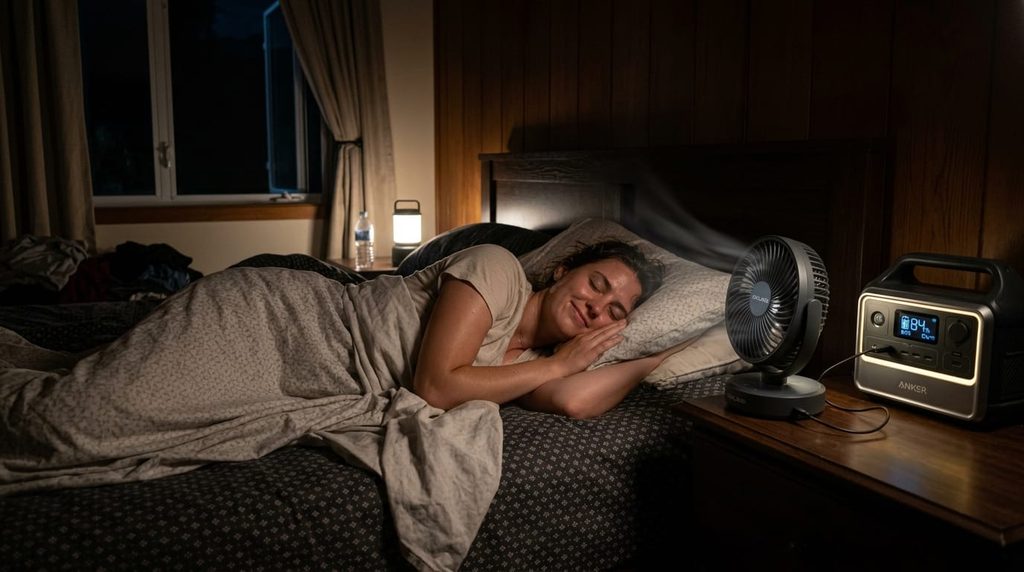
The most dangerous phase of a Gulf Coast hurricane is often the atmospheric aftermath. Once the storm clouds break, ambient temperatures frequently surge past 95°F (35°C) with relative humidity exceeding 85%, pushing the outdoor heat index above 110°F (43.3°C). Without municipal power to drive central air conditioning, indoor living spaces turn into dangerous thermal traps within 24 hours.
Standard residential box fans or oscillating pedestal fans draw between 45W and 85W AC, which will exhaust a 500Wh portable battery station before a single night concludes. Running heavy AC motor loads during a prolonged grid outage quickly drains reserves needed for communication and food storage.
Our team relies exclusively on brushless 12V DC and 5V USB-C personal and tent circulation fans. High-efficiency brushless DC motors move substantial air volume while drawing only 3W to 7W on low-to-medium settings and under 10W on maximum speed. Placing a 5W DC fan directly at the bedside creates focused evaporative convective cooling across the skin, allowing restful sleep on a microscopic energy budget.
A mid-sized 512Wh power station can run two 5W DC fans continuously for over 45 hours on a single charge. This targeted airflow provides vital physiological heat relief, preventing heat exhaustion and dehydration while conserving over 85% of your total stored energy.
Secret 5 – Recharging Off-Grid When the Grid Stays Down for a Week
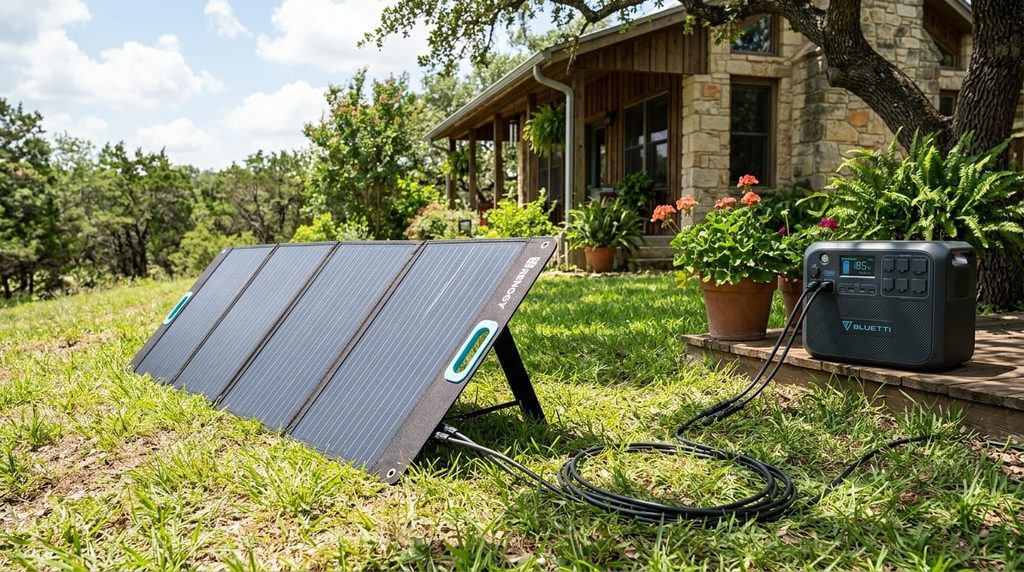
When regional transmission infrastructure suffers catastrophic physical failure, utility outages routinely extend into week two. Stored battery reserves alone will not bridge a seven-day outage without a dedicated off-grid harvesting strategy. Portable folding solar panels provide a clean, unlimited fuel supply, provided they are deployed correctly in post-storm environments.
Post-landfall conditions present specific operational hazards for photovoltaic equipment. High ground moisture, residual debris, and ambient temperatures exceeding 100°F (37.8°C) will degrade panel efficiency and trigger thermal throttling on charge controllers. Always position your portable power station in a shaded, well-ventilated, dry space while running extended 10 AWG to 12 AWG solar extension cables to your solar array in direct sunlight.
To safely connect panels to your battery bank without thermal throttling, follow our tutorial on [how to charge a power bank with solar] to dial in proper voltage matching and MPPT efficiency. Match your panel array’s Open Circuit Voltage (Voc) carefully so it stays within your power station’s rated DC input window, typically 11V to 60V DC.
Finally, maintain a tiered charging protocol where large 1,000Wh+ stations recharge primary appliances, while compact power banks handle personal tactical electronics. If you need pocket-sized grab-and-go EDC packs, check our reviews of the best power banks for camping and storms and the ultralight Flextail Zero Power review to keep your bug-out bags energized.
The Hurricane Off-Grid Checklist Table
| Priority Level | Essential Appliance | Average Wattage | Recommended Power Source |
|---|---|---|---|
| Priority 1: Critical Life Support | Medical CPAP / BiPAP Machine | 25W–45W DC (Humidifier Off) | 500Wh–1,000Wh LiFePO4 via 12V DC Port |
| Priority 2: Communications | Wi-Fi Router & Fiber ONT Modem | 12W–18W DC (Combined) | 256Wh–512Wh Battery via 12V DC Trigger Cable |
| Priority 3: Food Preservation | Full-Sized Refrigerator (Duty Cycled) | 100W–150W Running (1,000W Surge) | 1,000Wh–2,000Wh Station (30 min / 2 hr Cycle) |
| Priority 4: Thermal Relief | Brushless Bedside / Circulation Fans | 4W–8W DC (Per Fan) | 20,000mAh Power Bank or 12V DC Station Port |
| Priority 5: Ambient Illumination | 5V USB LED Room Light Arrays | 1W–2W DC (Per Fixture) | 10,000mAh–20,000mAh USB Power Bank |
| Priority 6: Mobile Devices | Smartphones & Emergency Radios | 5W–18W USB-C PD | 10,000mAh EDC Power Bank / Solar Recharging |
The Off-Grid Watts Verdict
Surviving an extended post-hurricane blackout is not about buying the biggest, loudest gas generator on the showroom floor hours before landfall. It comes down to disciplined load management, understanding inductive starting surges, and eliminating parasitic AC inverter losses through direct 12V DC distribution.
When you transition your critical household loads to efficient DC pathways and enforce strict duty cycling, a modest 1,000Wh LiFePO4 power station paired with 200W of folding solar panels outperforms a noisy gas generator in reliability, safety, and operational sanity. Prepare your hardware, test your cables, and configure your power tiers before the tropical disturbance forms in the basin.
Leave a Reply