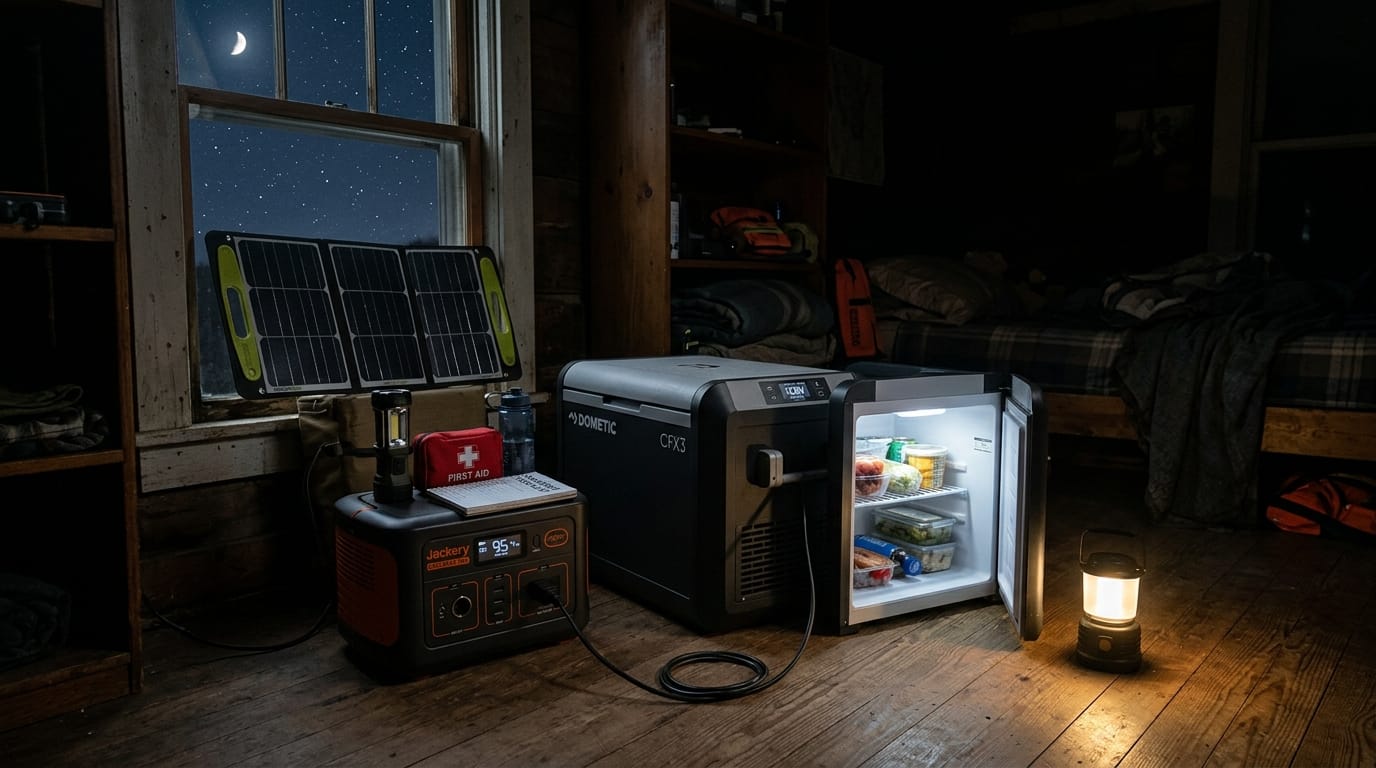
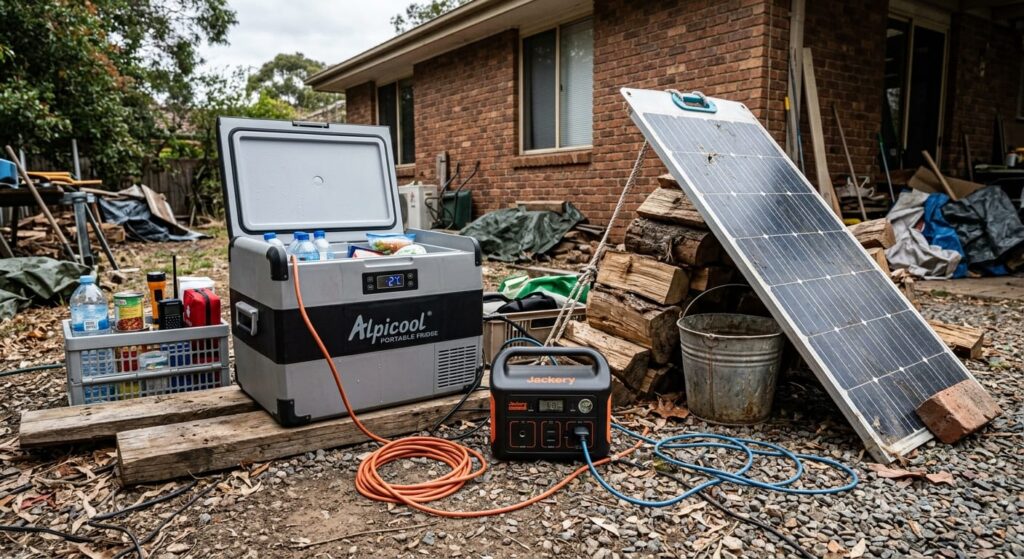
When severe weather and grid failures hit in the heat of summer, keeping food, fresh water, and critical temperature-sensitive medications cold becomes an immediate survival priority. Traditional household refrigerators consume between 1,200Wh and 2,500Wh per day, quickly draining standard portable power stations within hours.
By switching to a dedicated 12V portable fridge (compressor-based cooler) powered directly by native DC battery storage and replenished by portable solar panels, you can maintain continuous refrigeration indefinitely throughout a multi-day blackout. This guide breaks down the underlying electrical math, compressor duty cycle physics, battery bank sizing, and solar array targets needed to build a reliable off-grid cooling setup.
Technical Breakdown: The Physics of Off-Grid Refrigeration
Operating a 12V portable compressor fridge during a prolonged grid failure requires managing three key electrical variables: compressor duty cycle, energy conversion losses, and daily solar replenishment rates.
1. Compressor Duty Cycle & Ambient Temperature Penalties
Unlike household absorption refrigerators or thermoelectric coolers (which run continuously and draw massive amounts of power), 12V portable fridges utilize efficient DC micro-compressors (such as Secop/Danfoss or LG compressors).
The compressor does not run 100% of the time. Instead, it cycles ON to pull the cabinet temperature down to your setpoint (e.g., 38°F), and cycles OFF once reached.
- Duty Cycle Ratio: The percentage of time the compressor actively runs per hour. In a mild 70°F environment, a 12V fridge may have a 20% to 25% duty cycle (running 12 to 15 minutes per hour).
- High Ambient Heat Penalty: In summer storm blackouts where ambient temperatures reach 90°F–95°F inside a home or vehicle, cabinet thermal insulation loses resistance. The compressor must work harder, increasing its duty cycle to 50%–70% (running 30 to 42 minutes per hour). A fridge drawing 45 Watts during compressor operation will consume ~180Wh/day in cool weather, but over 540Wh to 750Wh/day in extreme summer heat.
2. Native 12V DC vs. 110V AC Inverter Conversion Losses
Plugging a 12V fridge into a power station’s 110V AC outlet using a wall brick forces double conversion: DC battery power is inverted to AC, and the power brick converts AC back to DC.
Furthermore, keeping a 1000W–2000W AC inverter turned ON 24/7 introduces an “idle draw” (no-load loss) of 15W to 35W continuously. Over 24 hours, the inverter alone consumes 360Wh to 840Wh of battery energy just staying active—often more energy than the fridge itself consumes. Connecting your fridge natively to the 12V DC cigarette lighter or 12V Anderson output bypasses the AC inverter entirely, eliminating idle draw and boosting total system efficiency to 95%+.
3. Battery Chemistry & Usable Depth of Discharge (DoD)
To size your battery storage accurately for a 72-hour blackout:
- Lithium Iron Phosphate (LiFePO4): Offers a 90%–100% usable Depth of Discharge (DoD) without damaging the cells, with 3,000 to 5,000+ charge cycles. A 500Wh LiFePO4 battery provides ~450Wh–500Wh of real-world energy.
- Lead-Acid / AGM: Limited to a 50% max Depth of Discharge to prevent permanent plate degradation. A 100Ah (1200Wh) AGM battery yields only 600Wh of usable capacity.
4. Daily Solar Replenishment & MPPT Controller Efficiency
12V compressor fridges incorporate built-in low-voltage battery protection cut-offs (e.g., stopping operation if input voltage drops below 10.8V). Thin 20AWG or 18AWG cables experience significant line resistance, causing “voltage sag” when the compressor starts up. Using heavy-duty 16AWG or 14AWG copper wiring prevents voltage drop and stops premature fridge shutoffs.
Product Recommendations
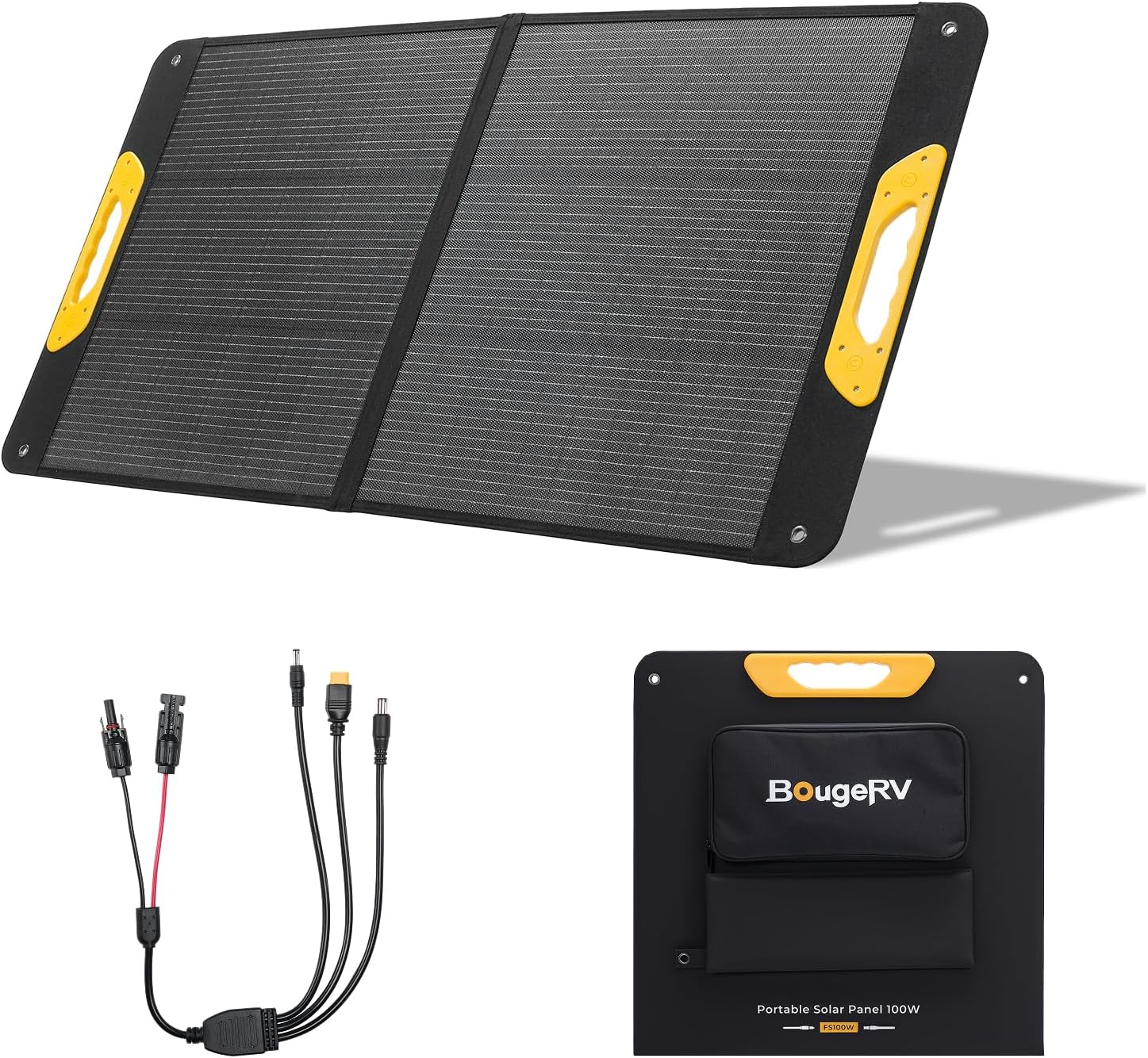
BougeRV 100W 12V Mono Portable Solar Panel
Why We Recommend It
To keep a 12V fridge running indefinitely, reliable solar input is essential. The BougeRV 100W Portable Solar Panel features high-efficiency monocrystalline solar cells (~23.5% conversion) housed in a durable, foldable kickstand design. It connects natively to portable power stations or 12V solar charge controllers, providing steady replenishment during daylight hours to offset your fridge’s overnight battery draw.
Key Specs
- Peak Output: 100 Watts
- Cell Type: Monocrystalline (23.5% efficiency)
- Outputs: MC4 connectors / 8mm / Solar adapters
- Weight: 9.5 lbs (4.3 kg)
Pros & Cons
- Pros: Lightweight and easy to re-position for optimal sun angle, durable weather-resistant coating, strong low-light performance.
- Cons: Single 100W panel requires 5+ peak sun hours to fully offset high summer fridge draws (pairing two in parallel is recommended for 90°F+ heat), kickstands require manual adjustment throughout the day.
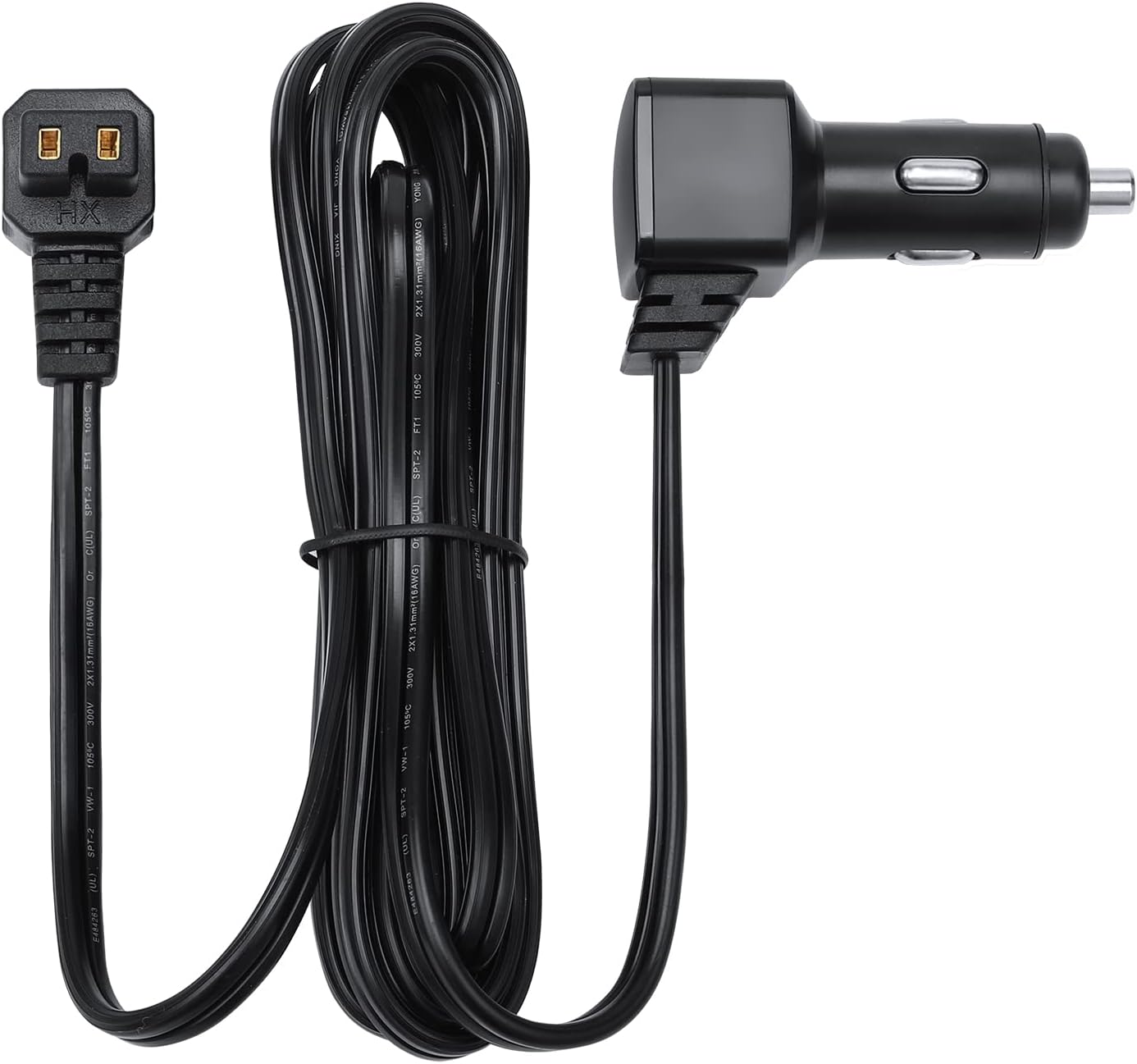
ICECO 16AWG Heavy-Duty 12V DC Extension Cable
Why We Recommend It
A common reason 12V fridges shut down unexpectedly during a blackout is “voltage sag” caused by thin, high-resistance factory cables. This ICECO 16AWG extension cable uses thick copper wiring to minimize voltage drop over distance, ensuring your compressor receives steady 12V/24V power without triggering false low-voltage cut-offs on your battery bank.
Key Specs
- Wire Gauge: 16AWG Heavy-Duty Copper
- Length: 12 feet (3.6 meters)
- Current Rating: 15A Max
- Connector Type: 12V Cigarette Lighter Plug to Female Socket
Pros & Cons
- Pros: Minimizes voltage drop to prevent compressor shutdown, heavy insulation protects against abrasion, allows flexible fridge placement inside a cool room while keeping the power bank nearby.
- Cons: Thicker cable is stiffer to roll up, limited strictly to 12V/24V DC applications.
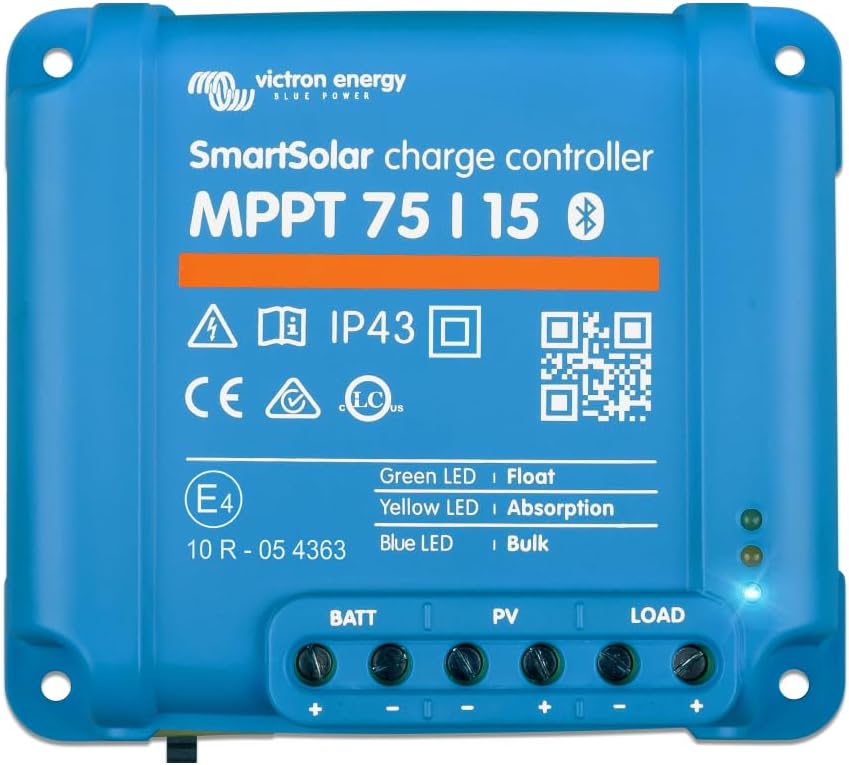
Victron Energy SmartSolar MPPT 75/15 Charge Controller
Why We Recommend It
If you are building a custom DIY 12V battery setup to run your portable fridge, the Victron SmartSolar MPPT 75/15 is the industry benchmark for solar conversion efficiency. It extracts up to 30% more energy from solar panels than PWM controllers and features built-in Bluetooth monitoring, allowing you to track real-world solar yield, battery voltage, and daily watt-hour generation directly from your smartphone.
Key Specs
- Max Solar Voltage: 75V
- Max Charge Current: 15A
- Technology: Ultra-fast Maximum Power Point Tracking (MPPT)
- Connectivity: Built-in Bluetooth Smart
Pros & Cons
- Pros: Exceptional solar conversion efficiency even under partial shade, live smartphone app monitoring, advanced multi-stage battery charging algorithms.
- Cons: Higher price point than basic PWM controllers, requires basic wiring knowledge for DIY setups.
Check Price on Amazon →
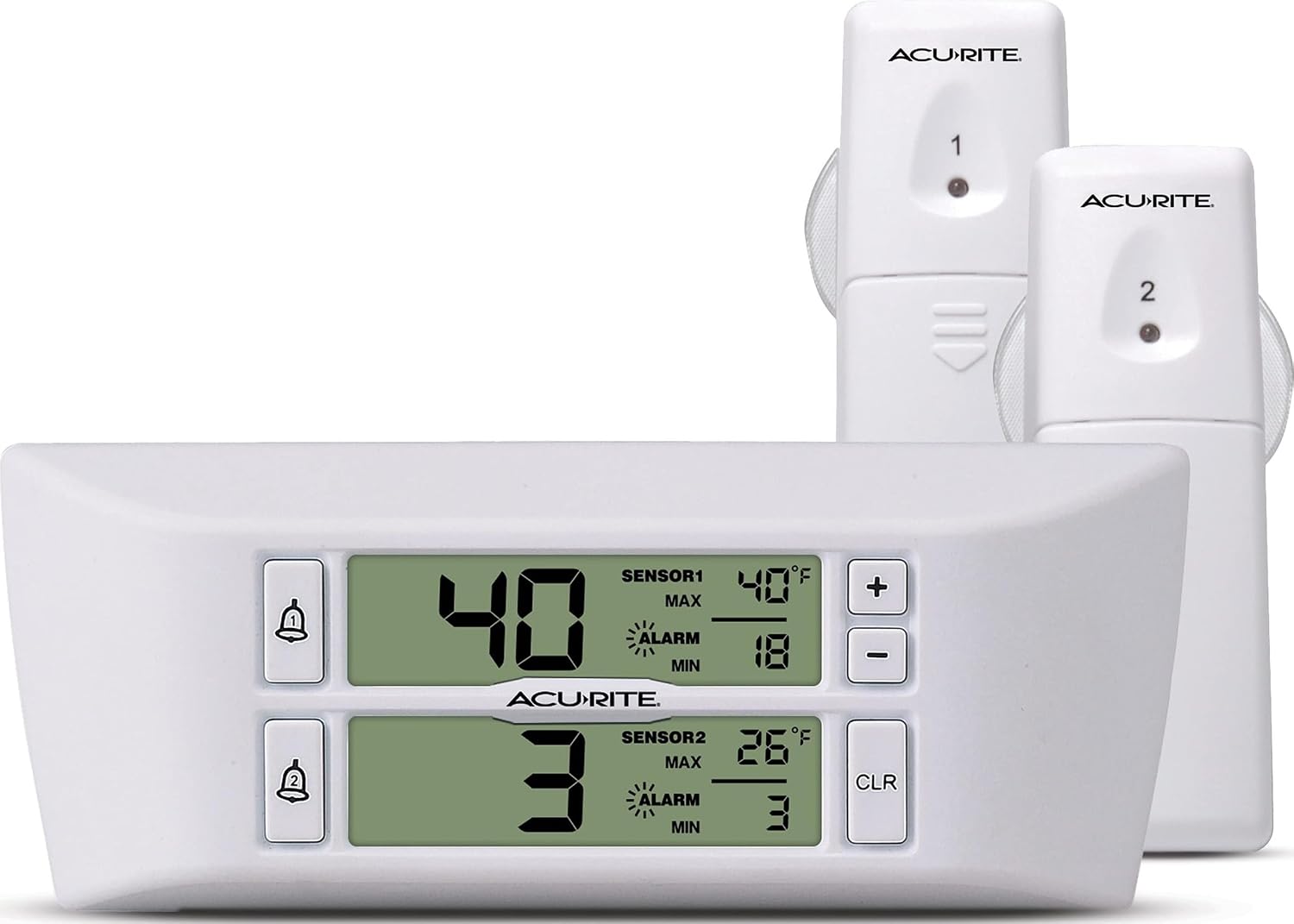
AcuRite Wireless Digital Refrigerator Thermometer with Alarms
Why We Recommend It
Opening your 12V fridge door to check the internal temperature spills out cold air and forces the compressor to run longer, wasting valuable battery power. The AcuRite wireless thermometer places a sensor inside the fridge while displaying real-time internal temperature on a digital display outside. It features customizable temperature alerts to warn you if temperatures rise above food-safe thresholds (40°F for refrigeration).
Key Specs
- Sensors: 1 Internal Wireless Sensor + 1 Display Console
- Temperature Range: -40°F to 100°F (-40°C to 37°C)
- Alerts: Audible and visual temperature threshold alarms
- Power: 4x AAA batteries total (long battery life)
Pros & Cons
- Pros: Prevents cold air loss by letting you monitor temperatures without opening the lid, alerts you immediately if battery power fails, compact digital display.
- Cons: Requires separate AAA batteries, display unit is not backlit.
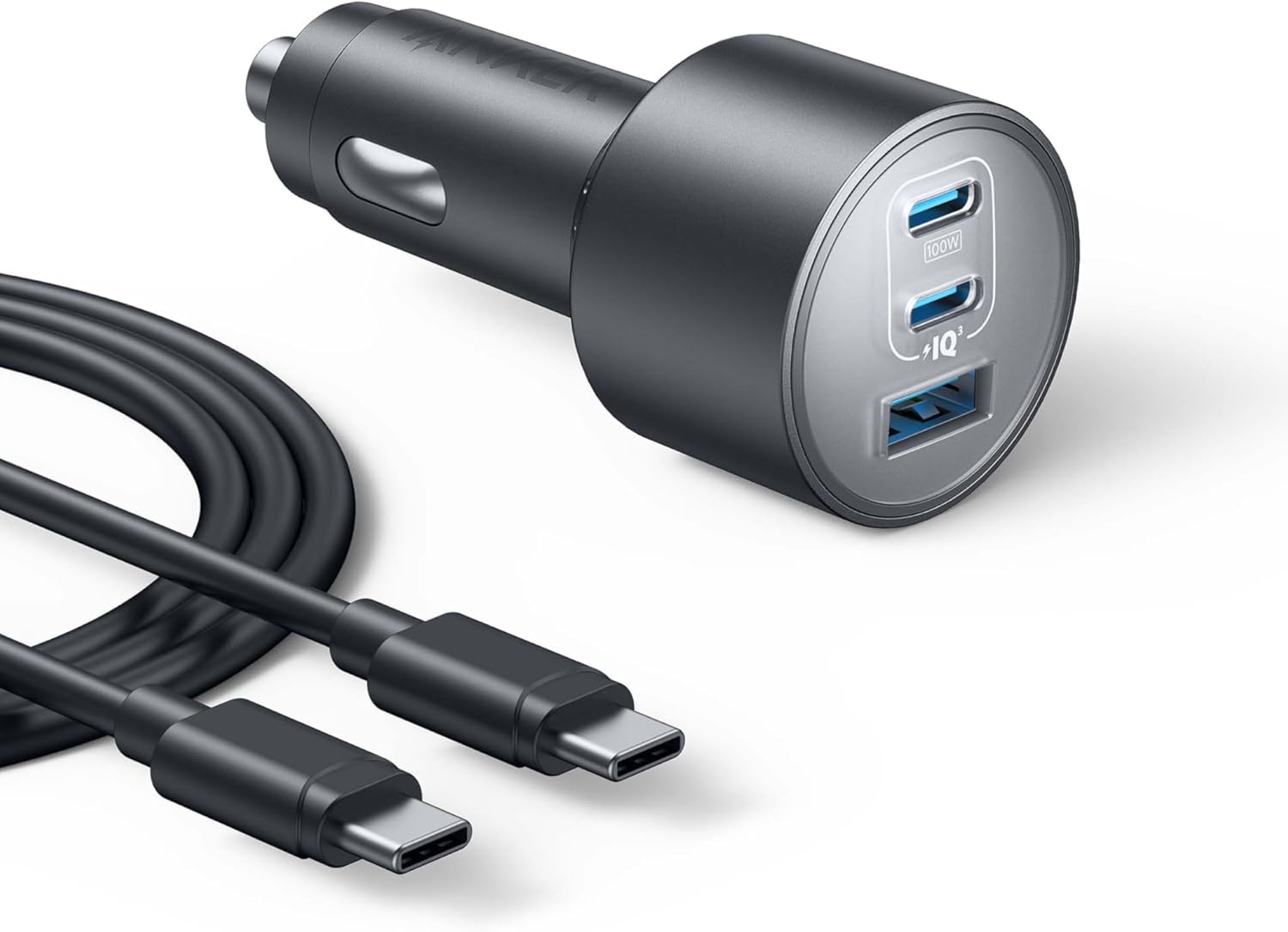
Anker 535 Car Charger (67W 3-Port USB-C PD DC Charger)
Why We Recommend It
When running your 12V fridge from a power station’s main 12V cigarette port, you still need an efficient way to keep phones, flashlights, and tablets charged without turning on the AC inverter. The Anker 535 plugs into a secondary 12V socket or splitter to deliver 67W of fast USB-C Power Delivery directly off the DC bus, preserving your main battery storage for refrigeration.
Key Specs
- Max Output: 67W Total
- Ports: 2x USB-C PD, 1x USB-A
- Input Voltage: 12V/24V DC
- Safety: ActiveShield 2.0 temperature monitoring
Pros & Cons
- Pros: High 67W USB-C output charges laptops and phones natively via DC, bypasses AC inverter idle draw, compact heat-dissipating housing.
- Cons: Requires an available 12V socket (or 12V splitter cable), total wattage is shared when multiple devices are plugged in.
Buyer’s Guide & Tactical Selection Summary
| Emergency Scenario | Recommended Primary Gear | Strategic Benefit |
|---|---|---|
| High Heat Summer Blackout (90°F+) | BougeRV 100W Panel + 16AWG Cable | Offsets high 50%+ compressor duty cycles while preventing low-voltage cable cut-offs. |
| Multi-Day Off-Grid Food Preservation | AcuRite Wireless Thermometer | Prevents cold air loss from opening the lid and alerts you if temperatures exceed 40°F. |
| DIY 12V Battery & Solar Setup | Victron SmartSolar MPPT 75/15 | Maximizes daily solar yield by up to 30% with live Bluetooth smartphone monitoring. |
| Multi-Device Emergency Charging | Anker 535 67W USB-C DC Charger | Keeps phones and laptops powered directly from 12V DC without engaging the AC inverter. |
By utilizing native 12V DC connections, monitoring internal cabinet temperatures remotely, and deploying an appropriately sized portable solar array, you can keep a 12V fridge running indefinitely through extended grid failures.
Website: https://offgridwatts.com
Direct Support: admin@offgridwatts.com
Leave a Reply