
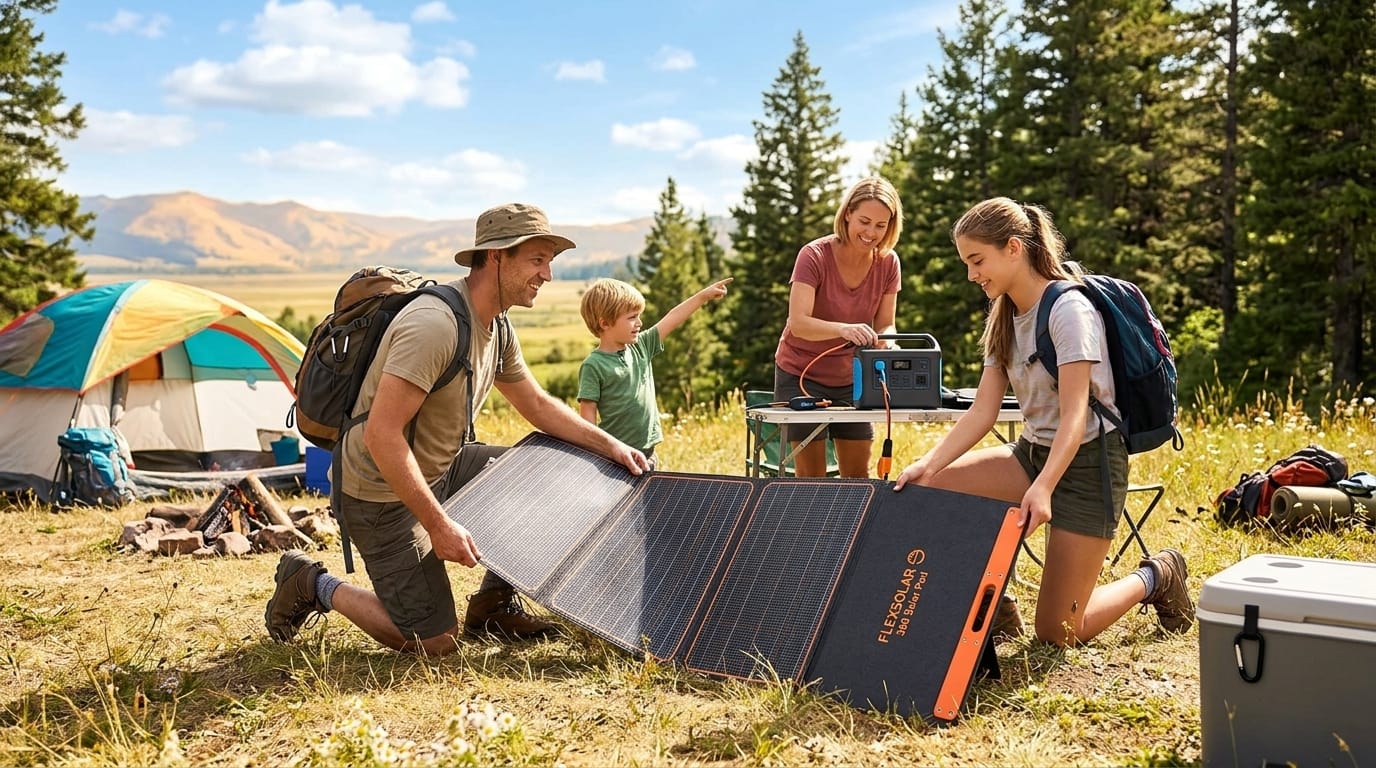
In emergency grid-down scenarios and remote backcountry expeditions, reliable power for mission-critical electronics is essential. High-density pocket battery packs provide vital short-term energy storage, but their runtime is finite without replenishment.
Additionally, How to charge a power bank remains essential for outdoor use. By using compatible chargers and prudent charging habits, you can extend device uptime in harsh environments.
Understanding how to charge a power bank with solar energy bridges this tactical gap.
Yet, it introduces an essential electrical challenge.
How can you safely pair an unregulated solar panel with a handheld battery without destroying its BMS or overheating cells?
At Off Grid Watts, our testing bench evaluated leading folding solar arrays and lithium packs under real-world sun conditions. Thus, they are necessary to keep your off-grid power system running safely.
The Physics: Direct USB Solar vs. Solar Generator Pass-Through
Field solar charging relies on two primary electrical setups. Choosing between a direct panel-to-battery connection determines your charging speed. Moreover, an intermediate storage buffer also affects gear weight and resilience against weather disruptions.
Method 1: Direct Regulated Solar
Direct solar charging utilizes compact, folding portable solar panels equipped with integrated junction boxes housing step-down DC buck converters.
Additionally, these regulators step down variable photovoltaic voltages into standardized 5V USB-A outputs.
They provide USB-C outputs and negotiate current directly with your battery pack.
Cloud throttling and dropouts represent the primary vulnerability of direct charging. When passing clouds reduce solar irradiance, panel output drops. However, this falls below the power bank’s minimum input voltage threshold (typically 4.5V).
Method 2: Basecamp Buffer / Pass-Through Hub
The basecamp buffer method deploys high-wattage panels (100W to 220W) into a dedicated LiFePO4 (LFP) portable power station.
Additionally, for example, a model such as EcoFlow RIVER 2 processes raw photovoltaic current through an internal MPPT charge controller.
This demonstrates How to charge a power bank.
Steady power delivery is maintained because the station uses solar generator pass-through architecture.
Additionally, it isolates your smaller batteries from solar turbulence while absorbing incoming solar fluctuations.
The power station then dispenses clean, continuous DC power to recharge your pocket power banks overnight without interruption.
Understanding Input Limits and USB-C PD Protocols
Attempting to connect raw, unregulated DC solar output directly to a pocket power bank will destroy it. Moreover, by bypassing step-down regulation, you feed overvoltage into the battery pack. This destroys the input power management IC and creates a severe fire hazard.
Handshake protocol negotiation protects your gear when using a modern USB-C PD solar charger.
USB Power Delivery (PD) establishes digital communication between the panel’s controller and the battery pack.
Additionally, it uses the Configuration Channel (CC) line to select safe voltage rails (5V, 9V, 12V, 15V, or 20V).
Furthermore, it also matches amperage for safe charging.
High-capacity intake rates are standard on premium, laptop-grade power banks.
Moreover, they accept 65W to 100W of input power (operating at 20V and 3.25A to 5A).
These advanced units can absorb a complete 20,000mAh recharge in under an hour when connected to high-output solar arrays.
Trail battery limitations apply to standard consumer packs and ruggedized outdoor batteries.
Additionally, they typically cap intake at 15W to 20W, negotiating 9V/2A or 12V/1.5A.
Connecting an 18W-limited battery to a 60W solar panel will not speed up charging.
Therefore, the internal BMS throttles current intake to preserve cell life.
Top 3 Portable Solar Panels for Power Banks (Field-Tested Picks)
Our field tests evaluated dozens of folding solar arrays on conversion efficiency, port regulation, thermal stability, and auto-restart capabilities. Additionally, below are the three standout panels that excelled on our testing bench.
Pick 1: BigBlue 28W USB Solar Charger (The Reliable Budget Classic)
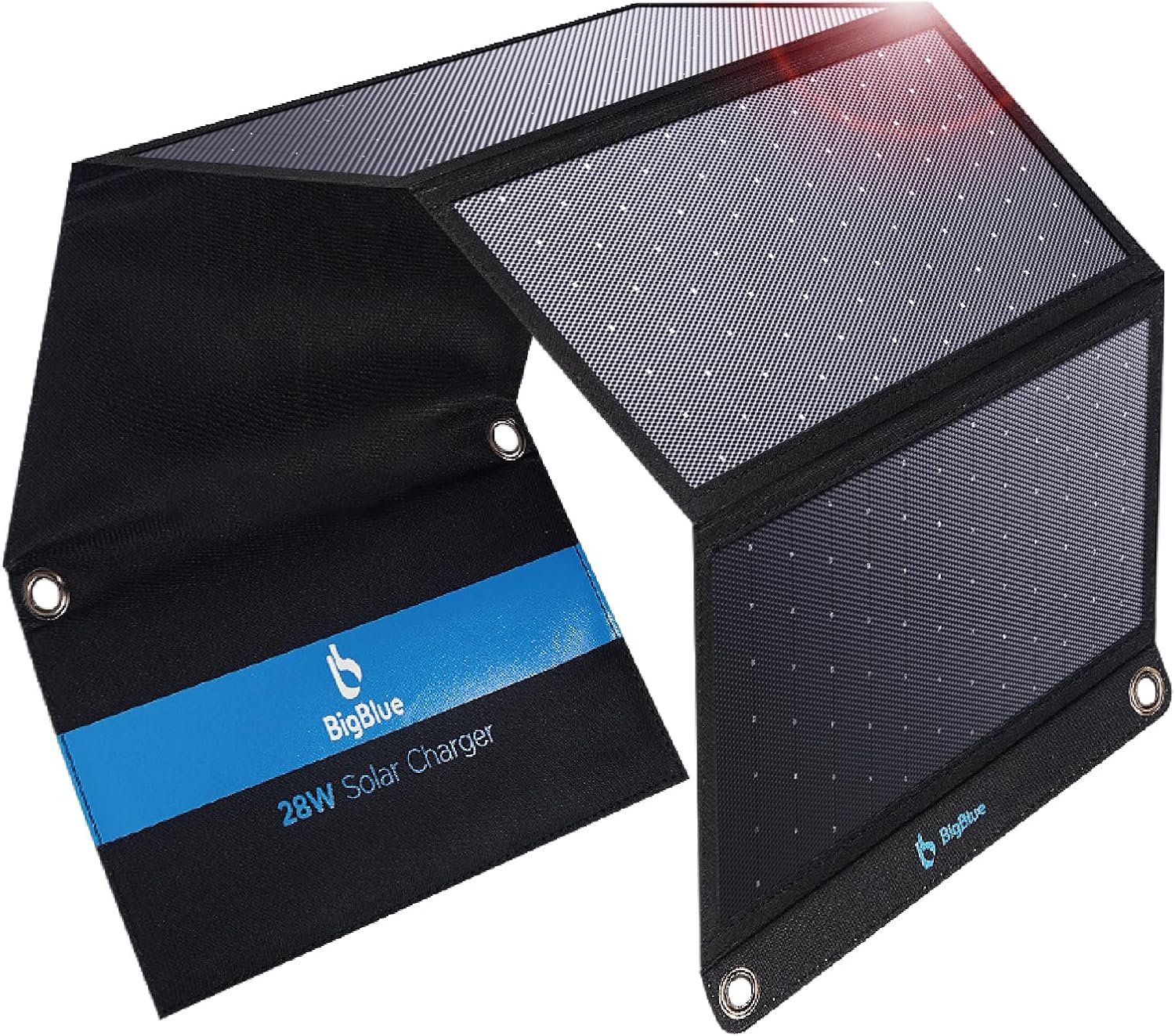
Hardware Profile: The BigBlue 28W utilizes four high-efficiency SunPower mono-crystalline panels folded into a durable canvas chassis.
Additionally, it features triple USB-A outputs (up to 5V/2.4A per port, 4A max overall).
An integrated digital ammeter measures real-time current, and it includes smart auto-restart circuitry.
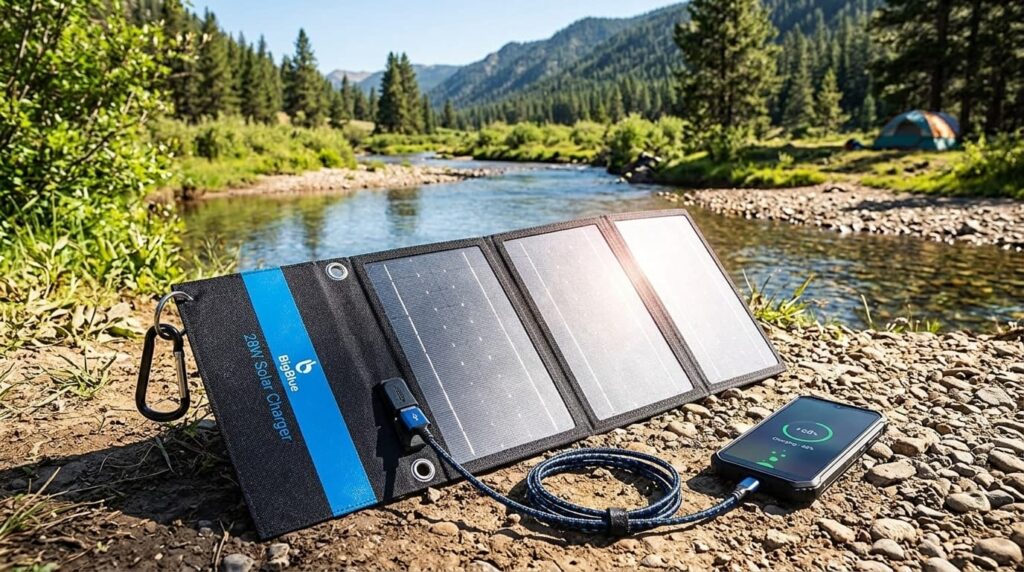
- Technical Pros: The integrated ammeter simplifies finding the optimal panel angle; auto-restart firmware immediately recovers current flow after cloud shading.
- Technical Cons: Lacks native USB-C PD high-voltage rails; total output is limited to 5V charging speeds.
- Best For: Standard 10,000mAh–20,000mAh power banks and general emergency preparedness kits.
How to charge a power bank — Pick 2: FlexSolar 60W Foldable Solar Panel (The High-Output USB-C PD Pick)
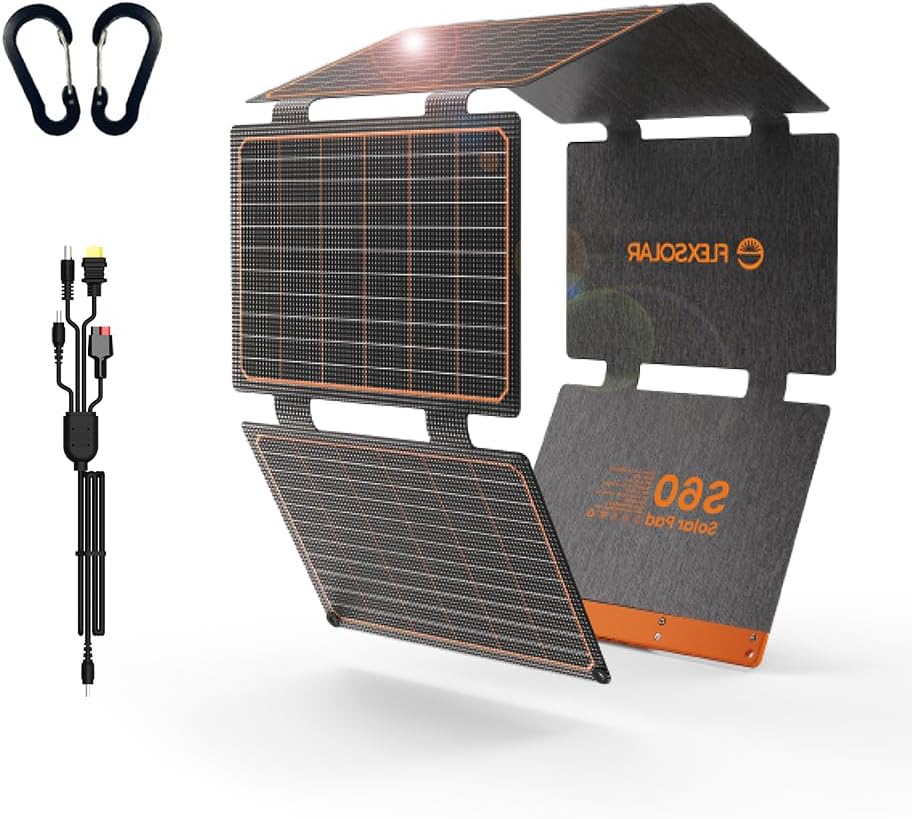
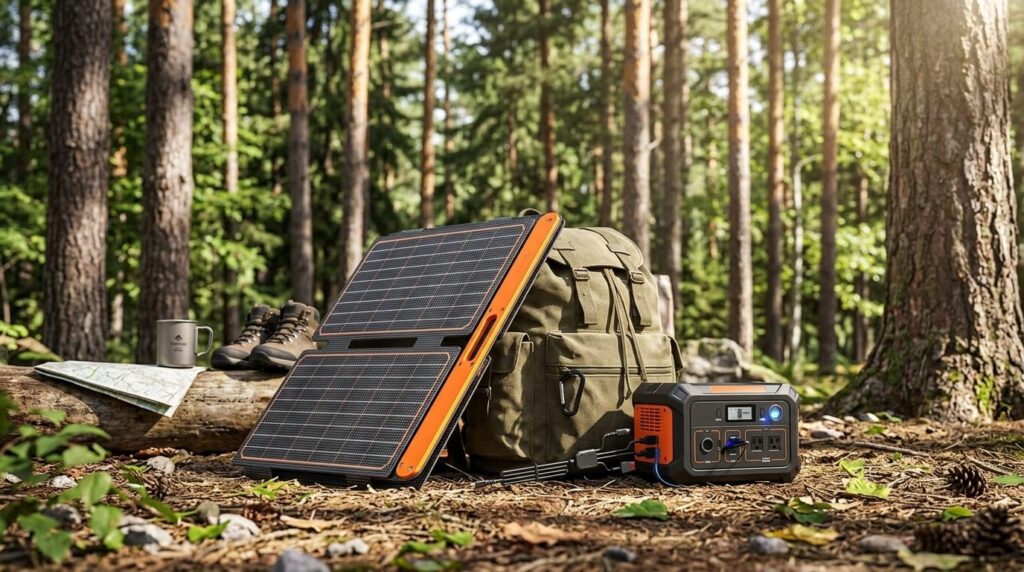
Hardware Profile: The FlexSolar 60W is a heavy-duty folding array engineered for rapid energy delivery.
Additionally, it includes a USB-C PD port delivering up to 45W–60W.
It also has a Quick Charge 3.0 USB-A port and an included multi-port DC cable harness.
- Technical Pros: Delivers true high-voltage USB-C PD profiles (up to 20V/3A); fully saturates high-capacity 65W/100W power banks in direct sunlight.
- Technical Cons: Larger folded footprint; heavier carry weight (3.0 lbs) compared to 30W-class panels.
- Best For: Fast-charging high-capacity laptop-grade battery packs (such as the Anker Prime series) directly from the panel.
Pick 3: Anker SOLIX PS30 30W Portable Solar Panel (The Durable Weatherproof Pick)
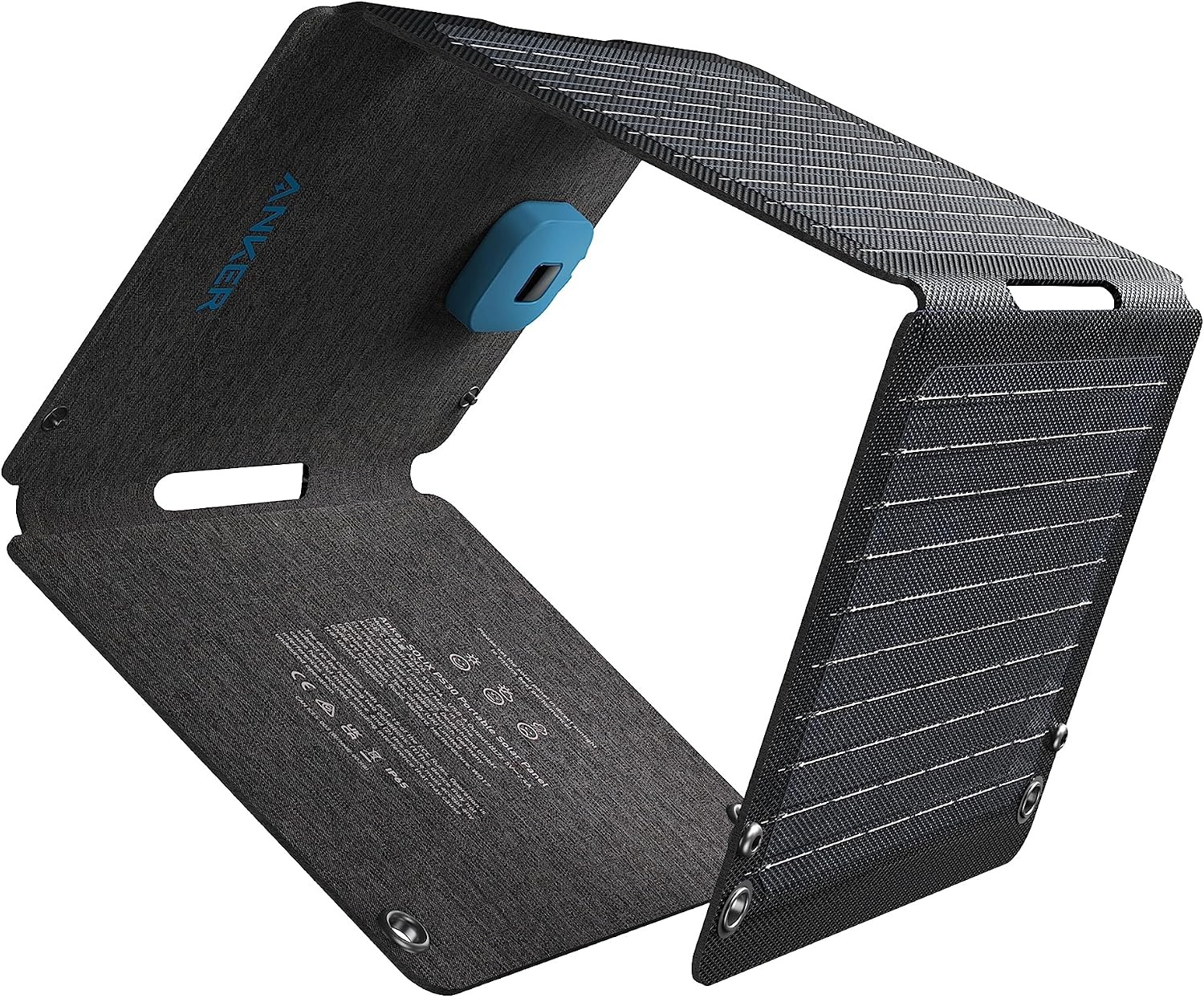
Hardware profile: The Anker SOLIX PS30 is an ultra-compact three-panel folding array.
Additionally, it delivers up to 30W of output across dual USB-C and single USB-A ports.
Furthermore, it features an IP65 dust and water-resistance rating and smart IC dynamic power distribution.
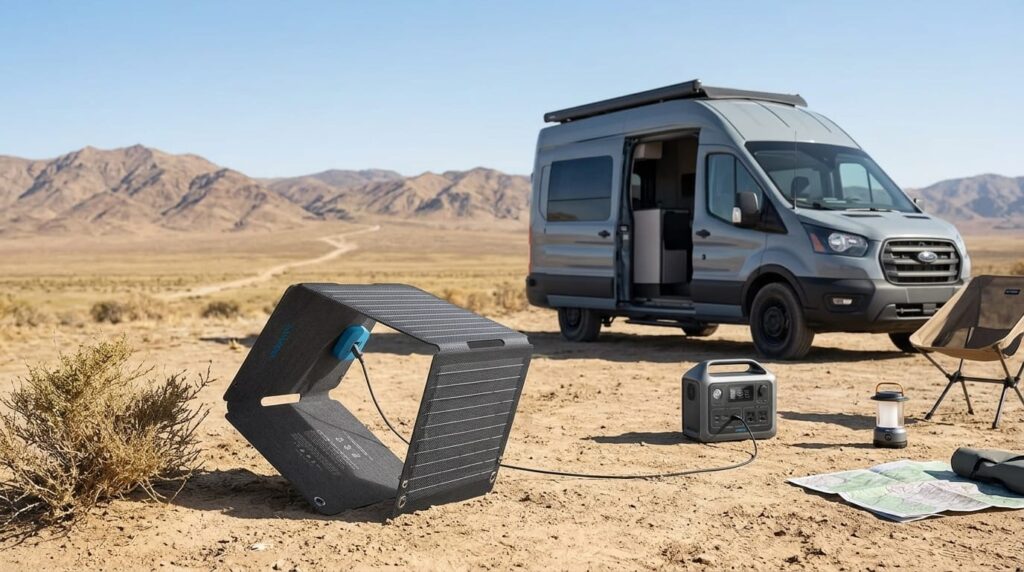
- Technical Pros: Excellent weatherproofing for wet environments; ultra-compact folding size with rugged reinforced grommets for lash-down charging.
- Technical Cons: USB-C output caps at 15W (5V/3A) without higher-voltage PD negotiation.
- Best For: Ultralight backpacking, wet-weather resilience, and minimalist bug-out bags.
| Model | Rated Wattage | Port Configuration | Weight | Best Use Case |
|---|---|---|---|---|
| BigBlue 28W | 28W | 3x USB-A (5V/4A Max) | 21.0 oz (1.31 lbs) | Budget Emergency Kits & General Use |
| FlexSolar 60W | 60W | 1x USB-C PD (45W–60W), 1x QC 3.0 USB-A, 1x DC | 48.0 oz (3.00 lbs) | High-Wattage Laptop Packs & Fast Charging |
| Anker SOLIX PS30 | 30W | 2x USB-C (15W Max), 1x USB-A | 23.6 oz (1.47 lbs) | Ultralight Backpacking & Wet Environments |
Step-by-Step Field Charging Protocol (Preventing Thermal Damage)
Achieving maximum solar conversion while preventing battery degradation requires strict adherence to field protocols. Additionally, follow these rules during every deployment.
- Optimize Solar Incident Angle: Position your panel at a perpendicular angle to direct solar rays, typically propped up between 30 and 45 degrees depending on your latitude and the solar zenith. Reorient your array every 60 minutes to eliminate cosine efficiency losses as the sun crosses the sky.
- Observe the Thermal Trap Rule: Never place your power bank in direct sunlight or inside the panel’s exterior fabric pocket. Trap heat degrades lithium cells rapidly; always place the battery underneath the angled panel in full shade to prevent thermal BMS throttling above 45°C (113°F).
- Deploy High-Efficiency Cabling: Use heavy-gauge, E-marker certified USB-C cables rated for 60W or 100W power delivery. Subpar, uncertified cables suffer from high internal resistance (IR drop), which drops voltage and forces the power bank into lower charging tiers.
Connecting Your Off-Grid Power Setup
Building a resilient power setup requires balancing solar harvesting speeds against storage capacity.
Additionally, to maximize field efficiency, pair your solar array with one of our field-tested best power banks for camping.
How to charge a power bank ensures rapid charge retention.
If your energy requirements exceed handheld packs, consider a larger solution.
Additionally, for continuous power buffering for a larger group, choose a dedicated basecamp hub like the EcoFlow RIVER 2 Review.
The Off Grid Watts Team Verdict
Matching the right solar panel to your power bank depends on your pack weight constraints. Additionally, it depends on the input specifications of your battery cells.
- For Ultralight Hiking: Choose the Anker SOLIX PS30 for its IP65 weatherproofing and rugged packability.
- For Budget Preparedness: Pick the BigBlue 28W for reliable, auto-restarting 5V power at an accessible price.
- For High-Capacity Packs: Deploy the FlexSolar 60W to unlock true USB-C PD charging speeds and minimize daytime charging bottlenecks.
Leave a Reply